

If you are done putting up with chaos, cramped seats, and guesswork, this guide is for you. We walk through how to plan senior luxury travel in 2026–2028: what level of service actually makes life easier, realistic pricing, and how to handle health, mobility, and insurance without giving up the good stuff.
1. What “Luxury Travel for Seniors” Really Means in 2025–2026
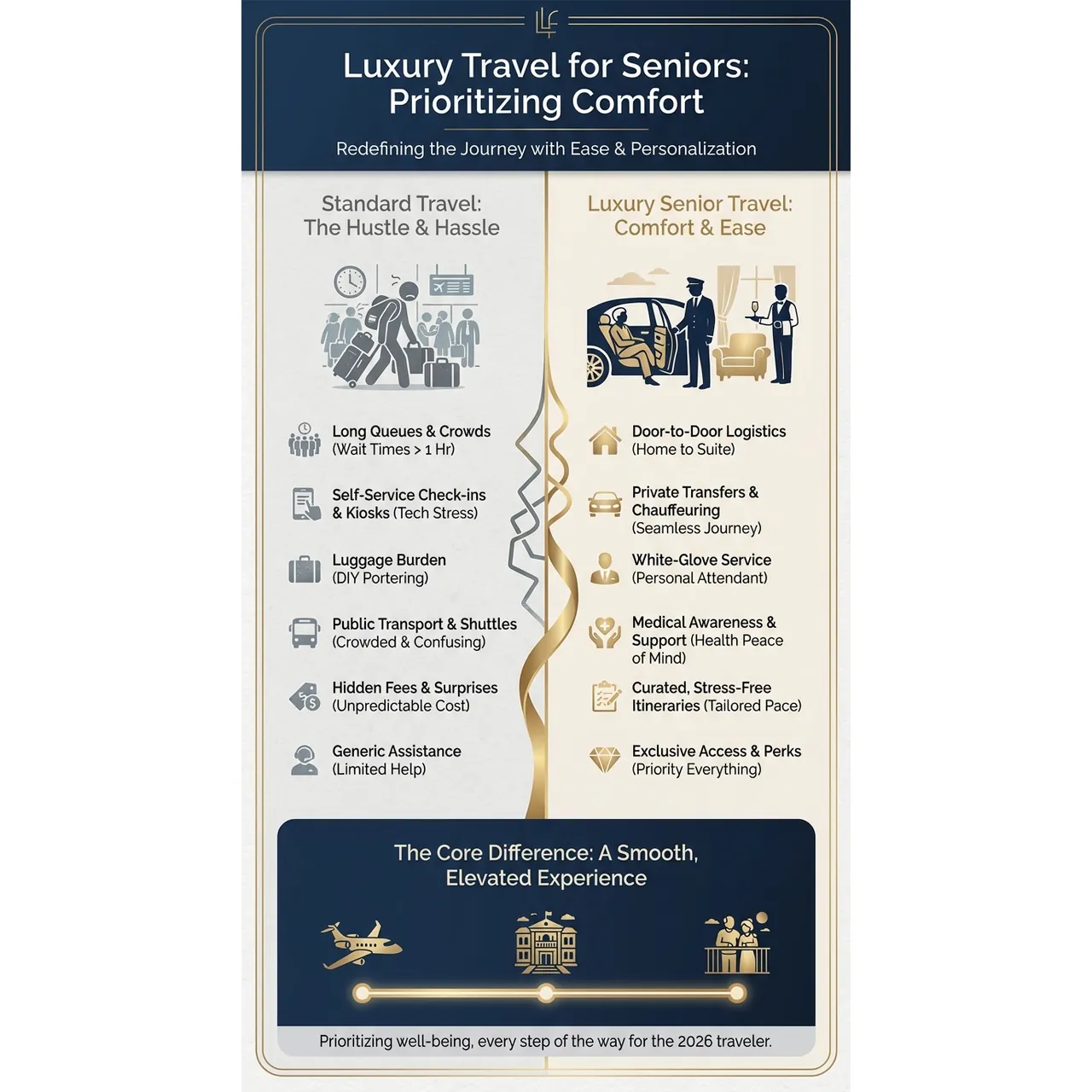
For seniors, luxury is less about shiny lobbies and more about how little friction you feel from door to door.
Think about it this way:
- Fewer check‑ins, lines, and crowds.
- Fewer moving pieces you need to coordinate yourself.
- More hands‑on help, more space, and quieter environments.
For older travelers, genuine luxury usually includes:
- Door‑to‑door logistics: Private airport transfers, someone handling your bags, and VIP airport services so you are not standing in a security line for 45 minutes.
- Senior‑friendly itineraries: Slower pacing, fewer hotel changes, routes designed to avoid endless stairs and steep streets whenever possible.
- High staff‑to‑guest ratios: Butlers, concierges, and hosts who bring what you need before you have to chase them.
- Medical‑aware planning: Insurance that actually covers pre‑existing conditions, a short list of reputable hospitals nearby, and optional medical escorts if your health profile calls for it.
- Privacy and space: Suites with separate living areas, quiet floors, and smaller guest counts on ships or vehicles so you are not packed in.
If you reach the end of a trip and feel like you worked a second job to manage it, that was not luxury, no matter how polished the hotel photos looked.
2. Ideal Types of Luxury Travel for Seniors
2.1 Luxury River Cruises
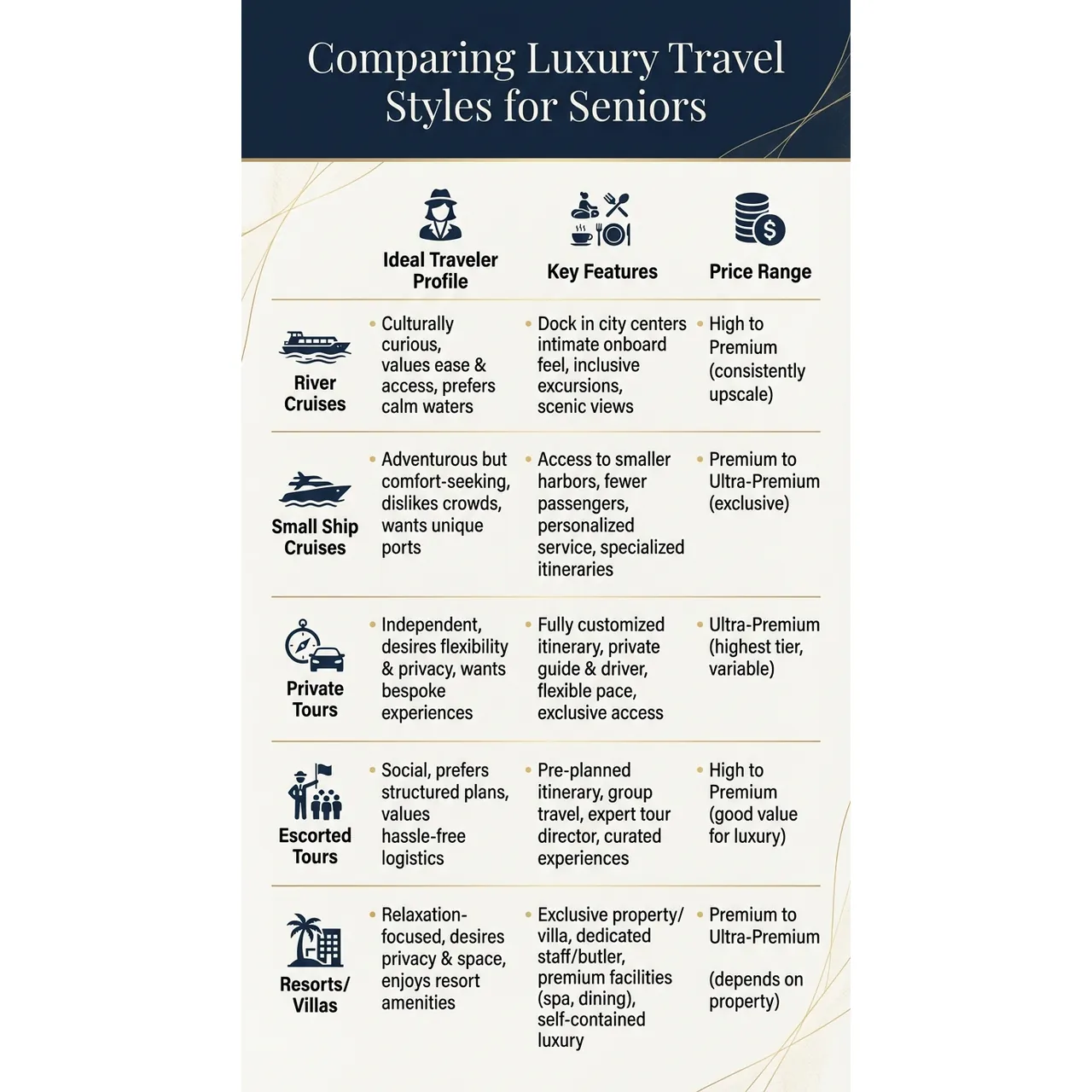
Best for: Travelers who still like to move, but prefer their culture in smaller bites with a soft bed waiting nearby.
- Recommended lines: AmaWaterways, Uniworld, Tauck, and Viking (upper‑premium to luxury).
- Daily walking tours usually offer graded activity levels, often color‑coded so you can pick the “gentle” option without feeling singled out.
- Ships dock near city centers, which means short walks, short drives, and no hour‑long bus runs just to reach a museum.
To go deeper into river sailing in Europe and beyond, you can also look at focused resources like a Best Douro River Cruise comparison or curated lists of the best Christmas river cruises in Europe if you enjoy holiday itineraries.
Price overview:
- Europe, 7–10 nights in peak 2025 season: $450–$900 per person per night, usually before airfare.
- Many itineraries include:
- Dedicated “gentle walker” groups.
- Wireless headsets so you can hear the guide without huddling at the front.
If your knees complain on cobblestones, this is one of the easiest ways to see multiple countries without playing suitcase hopscotch.
2.2 Small Ship Cruises (Ocean & Expedition)
Best for: Seniors who want to unpack once, eat well, and let someone else choreograph the details.
- Ocean luxury cruise lines Regent Seven Seas, Seabourn, Silversea, Explora Journeys.
- Why they work for seniors
- Ships you can actually cross without needing a nap on the way, plus elevators and plenty of seating in public spaces.
- Fine dining where you are not chained to a 6 pm or 8 pm slot unless you want to be.
- Enrichment lectures, classical or soft live music, and excursions that do not assume you are marathon training.
- Typical 2026–2027 pricing:
- True luxury, mostly all‑inclusive: $600–$1,500 per person per night, based on suite size, itinerary, and how early you book.
- World and Grand Voyages: $35,000–$150,000+ per person packages are normal.
Luxury Travel Planner advice: If you use a cane, walker, or just get tired after long walks, stay away from 4,000‑passenger floating malls. Aim for ships in the 700–1,000 guest range. You walk less, staff remember your name, and getting on and off the ship does not feel like a stadium event.
2.3 Private Tours for Seniors (Chauffeured & Hosted)
Best for: Couples or small groups who want full control of pace, route, and how many stairs they see in a day.
- Structure:
- Private driver‑guide, or a separate driver and guide if you want more focused commentary and safety.
- Hotels, transfers, some meals, and key tickets are booked ahead so you are not hunting reservations on your phone.
- Flexible start times, late starts after long flights, and scheduled downtime built into the itinerary.
Typical cost range 2026–2027:
- Europe/USA: $1,200–$2,500 per day per couple for mid‑level luxury.
- Ultra‑luxury with five‑star hotels, business‑class trains or flights, and private touring: $2,500–$5,000+ per day per couple.
Luxury Travel Planner advice: If you have heart issues, joint replacements, or anything that can flare unexpectedly, a private tour usually beats even the nicest group tour for safety and sanity. The guide can shorten the day, reroute to a less crowded site, or skip steps without needing group approval.
2.4 Small Escorted Tours
These are curated small‑group trips, usually 6-10 guests, with a set itinerary.
- Brands: Tauck, Abercrombie & Kent, Backroads “Easygoing,” Cox & Kings.
- Benefits:
- Staff move your bags. You focus on making the flight and enjoying the day.
- No wrestling with foreign train machines or taxi drivers.
- Ready‑made group of similar travelers, often in your age and interest range.
Price range:
- Land tours: $600–$1,200 per person per day, not including international airfare.
- Top departures and popular routes often need deposits 12–18 months ahead, especially if you want single rooms or accessible rooms.
These trips work well if you like structure and company but do not want to be herded like a budget tour.
2.5 Senior-Friendly Luxury Resorts & Villas
Best for: Seniors who prefer to fly in, park themselves somewhere comfortable, and not move again until checkout.
- What to look for:
- Rooms on the ground floor or reliable elevator access. A romantic cliff‑side room loses its charm if it means 60 steps twice a day.
- On‑site medical clinic or quick transport to a solid hospital. Ask which hospital they use, not just “we have a doctor.”
- Multiple dining venues so you are not walking across a massive property three times a day in the heat.
If you’re looking at a resort stay that can also double as a special celebration trip, resources on best all-inclusive honeymoon resorts or even best Sandals resort for honeymoon can be helpful benchmarks for the service level and amenities to expect, even if you are not on a honeymoon.
Cost guidelines:
- 5‑star resorts in the Caribbean, Mexico, Hawaii: $700–$2,000 per room per night in peak season for quality rooms, more for suites.
- Fully staffed villas, often for extended families, in Europe or the Caribbean: $2,000–$8,000+ per night, usually sleeping several relatives.
Villas look expensive until you divide the nightly rate by three generations. Then they often beat booking multiple luxury suites, plus you gain a private chef who can deal with sodium restrictions and picky grandchildren at the same time.
2.6 Private Jets, Yachts, and Ultra-Luxury Experiences
Best for: Seniors who find commercial airports physically punishing or who value time more than ticket prices.
- Private jet charters:
- Regional flights: $8,000–$20,000+ per flight hour, depending on aircraft size and availability.
- You bypass crowded terminals and long TSA lines, but you still need to handle medical coverage and evacuation planning.
- Crewed yacht charters:
- Mediterranean/Caribbean 2025 season: $30,000–$200,000+ per week, plus 20–35% for fuel, food, and tips.
- You set the schedule, swim where the water is clear, and rarely deal with crowds.
These options cut stress and transit time, but they also magnify risk if you ignore health and insurance. Confirm medevac coverage and nearest hospitals before you sign a charter contract.
3. How to Choose the Right Luxury Style for Your Needs
3.1 Start with Health, Not Destination
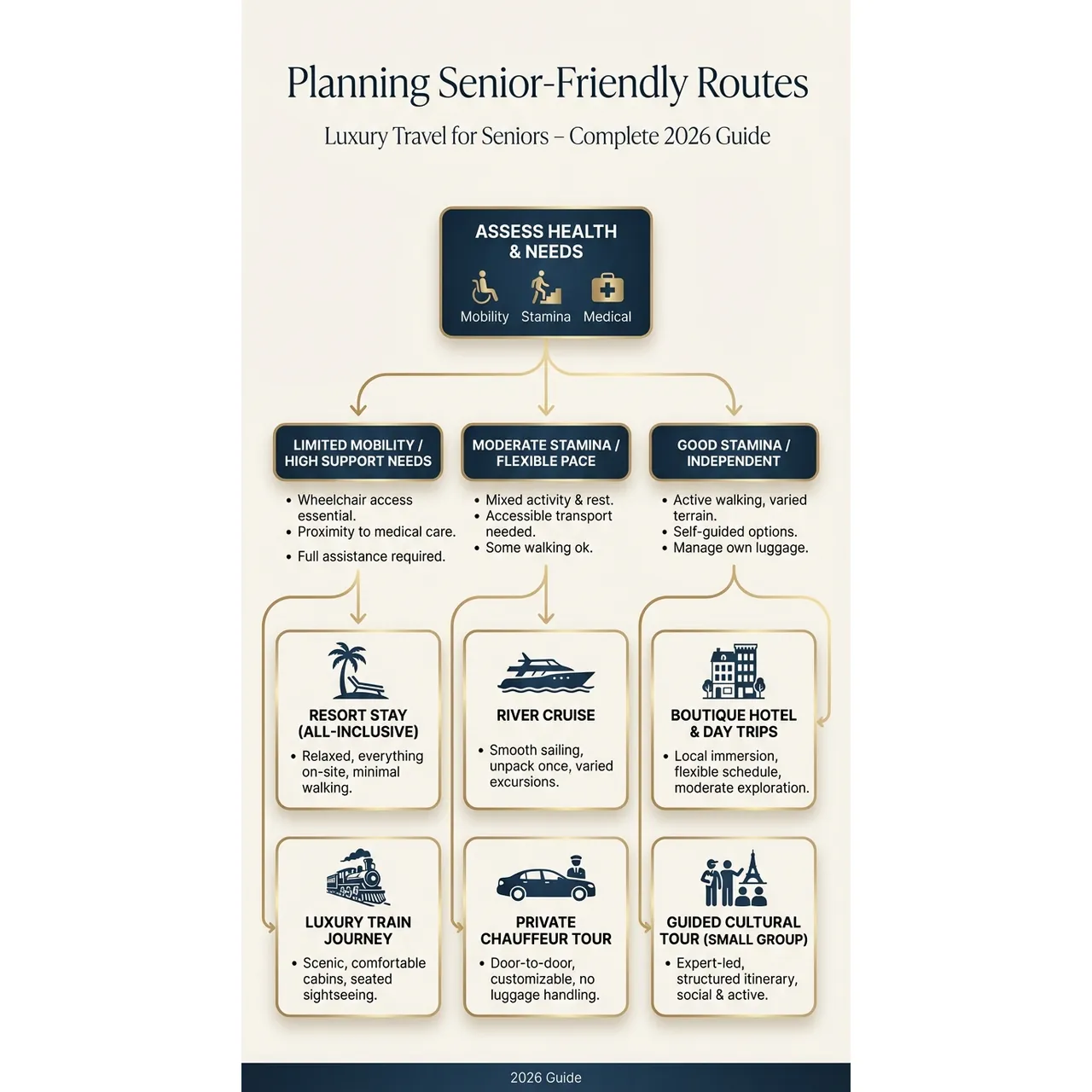
Most people start with the postcard: Paris, safari, Greek islands. That is backwards.
Begin with:
- Mobility Are stairs, uneven stone streets, or long museum corridors a problem?
- Stamina How many active hours can you handle before you stop enjoying the day?
- Medical needs Do you need refrigeration for medications, frequent bathroom access, or to stay close to hospitals?
Rule of thumb:
If you can comfortably wander a large shopping mall for several hours with breaks, you can usually handle a thoughtfully planned river cruise or small‑group luxury tour.
If that sounds exhausting, stick to resort‑based stays or itineraries with a private driver and minimal walking.
Design to your worst day, not your best, and you will enjoy more of the trip.
3.2 Decide Your Travel Style
Ask yourself, honestly:
- Do you like having people around you, or do you exhale when the door closes and the room is quiet?
- Is unpack‑once convenience more valuable than checking several countries off at once?
- Do you want adult children involved in planning, or would that just complicate things?
My Recommendations:
- Low‑maintenance: Luxury ocean or river cruise plus 2–3 nights in a pre‑ or post‑cruise hotel. Little packing, built‑in structure.
- Flexible but safe: Private driver‑guided touring anchored by high‑quality hotels. You control pace and timing every day.
- Family‑oriented: Multi‑generational villa or luxury resort with enough separate space that grandparents can retreat when the noise level spikes.
Pick the style that suits your energy and personality, not what your neighbor did last year.
Looking for an exotic bucket-list trip for a 60th birthday? Consider a 5-Star Luxury Private Cruise on the Amazon River or the Best Mekong Luxury Cruises.
4. Budgeting High-Comfort Travel (2026-2027)
4.1 Sample Budget Tiers (Per Couple)
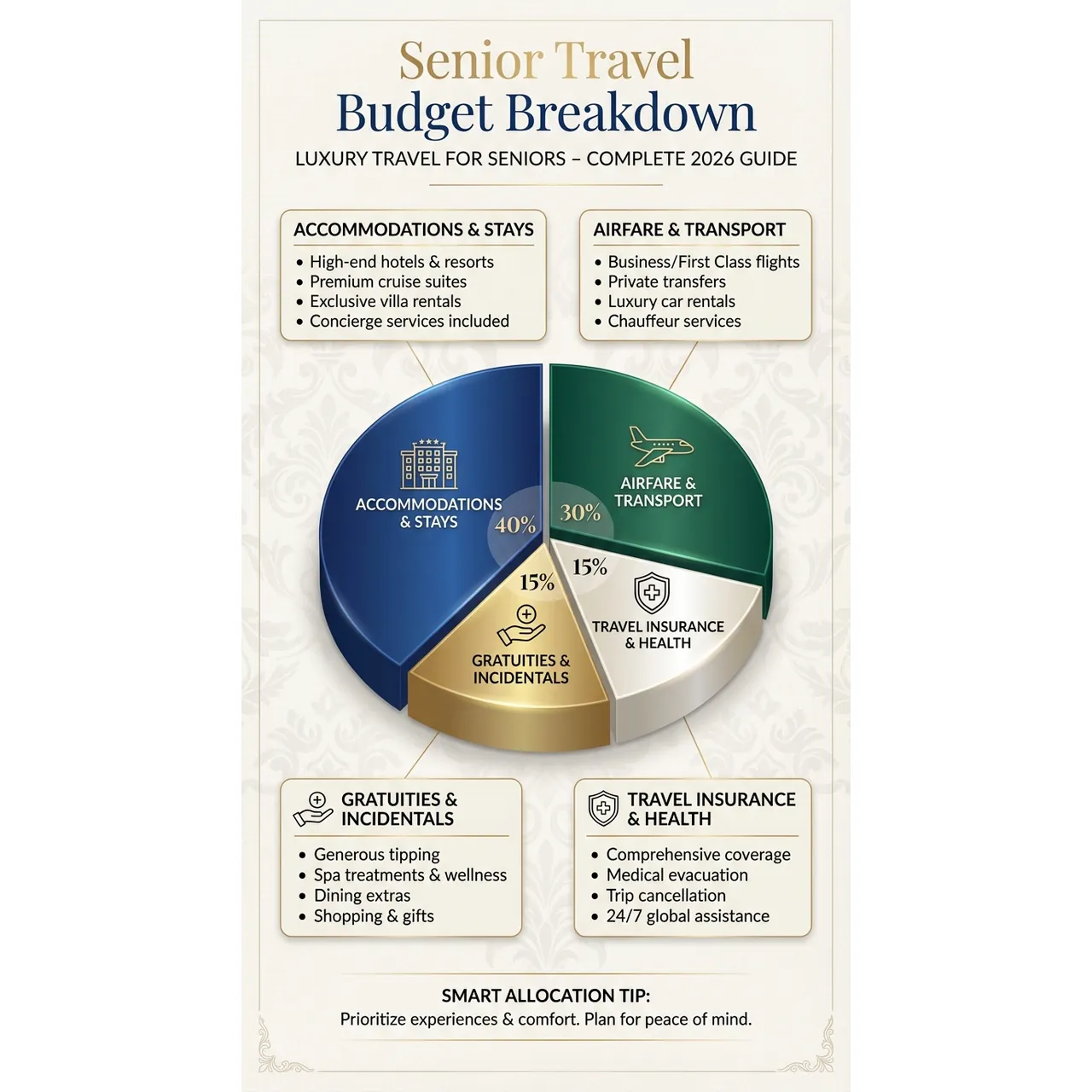
These are realistic starting points for seniors who want comfort above the basics (excluding international flights):
- Comfortable Luxury: $12,000–$20,000 for 7–10 nights.
- High-End Luxury: $20,000–$40,000 for 10–14 nights.
- Ultra-Luxury: $40,000–$100,000+ with first‑class or business‑class flights, suites, private guides, and potentially yachts or charters.
If a quote comes in well below these numbers and claims to be “five‑star,” start asking hard questions about room categories, hidden fees, and what is not included.
4.2 Key Cost Components
- Airfare:
- Premium economy US–Europe, 2025: $1,600–$3,000 per person round‑trip, depending on dates and airlines.
- Business class: $3,500–$7,500+ per person, more for peak holidays or last‑minute bookings.
- Travel insurance with senior‑appropriate coverage:
- Usually 6–12% of total trip cost.
- Higher if you add Cancel For Any Reason upgrades. For complex or high‑value trips, it’s worth reviewing a more specialized breakdown like Destination Wedding Travel Insurance—the same logic around coverage levels, medevac, and timing applies to senior luxury travel.
- Gratuities:
- Luxury cruises: Often included. If not, budget $15–$25 per person per day.
- Private drivers and guides: $50–$150 per day based on country, length of day, and service level.
4.3 Deposit Timelines & Payment Schedules
Most high‑end senior travel packages and luxury cruises follow similar structures:
- Deposit at booking: Usually 10–30% of the total trip.
- Final payment: Typically 60–120 days before departure.
- Expedition cruises and world cruises often want final payment 150–180 days before sailing.
My Recommendation: Seniors should skip the “cheap last‑minute” mindset for major trips. Accessible cabins, walk‑in showers, and the most conveniently located rooms disappear first. You also need breathing room for medical appointments, insurance purchases with pre‑existing condition waivers, and any visas or vaccinations.
5. Health, Safety, and Travel Insurance for Seniors
5.1 Pre-Trip Medical Planning
Before any significant trip, treat your health prep like another leg of the itinerary.
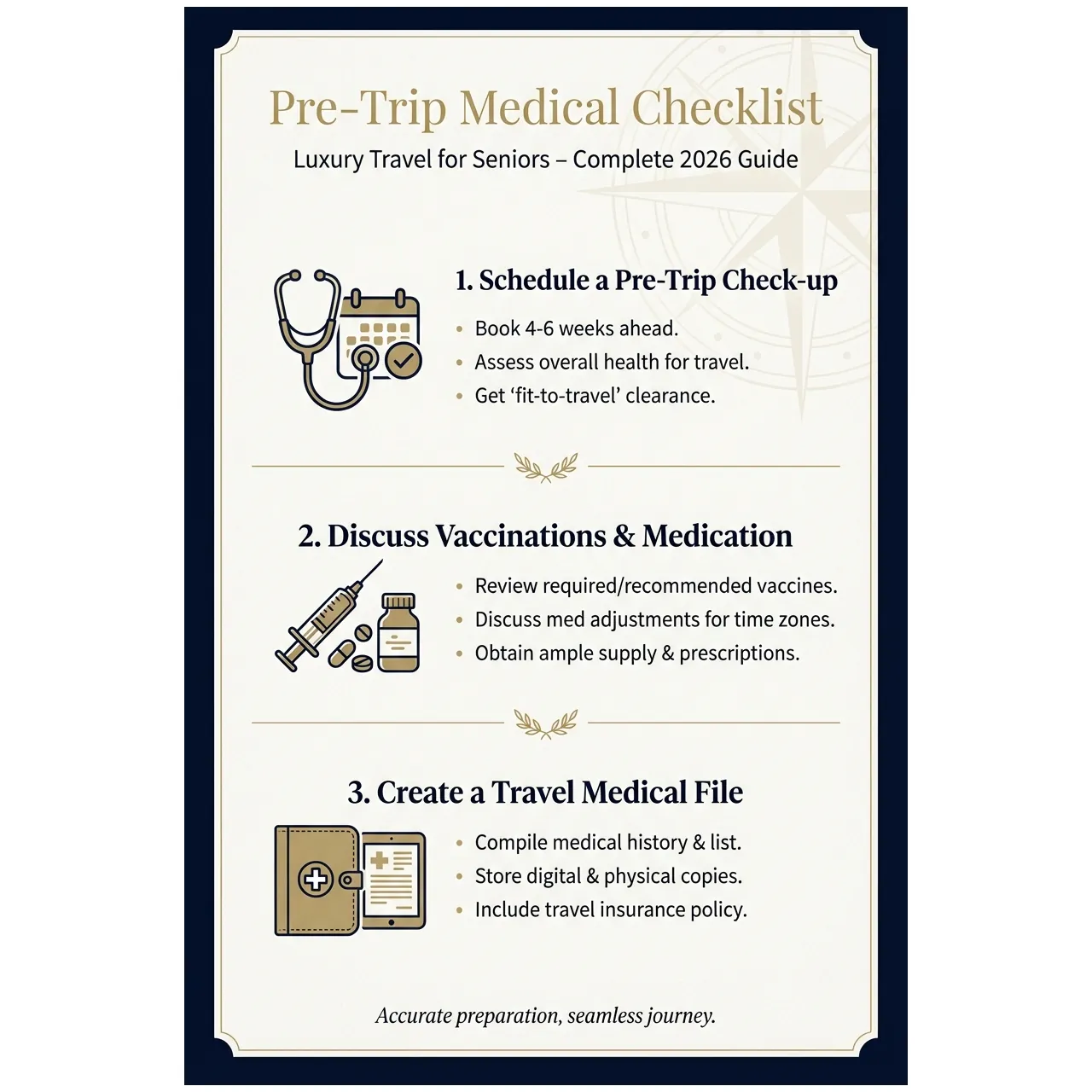
- Schedule a full check‑up 8–12 weeks before travel.
- Ask your doctor specifically:
- Which vaccines or boosters they recommend for your age and destination (flu, pneumonia, Covid‑19, and region‑specific options).
- Whether long flights or time zone jumps might aggravate your conditions.
- Whether you need medication adjustments for hot climates, higher altitudes, or increased activity.
Build a simple travel medical file:
- Updated list of medications with generic names, not just brand names.
- Copies of prescriptions, so a pharmacy abroad can refill if bags vanish.
- One‑page summary of diagnoses, allergies, and major surgeries.
Carry digital copies on your phone and printed copies in your carry‑on. Checked luggage does not always arrive on schedule; your medications and documents need to.
5.2 Travel Insurance Essentials
For seniors, basic online insurance picked at random can leave big gaps.
Look for:
- Pre‑existing condition waiver
Usually requires:- Insuring the full non‑refundable trip cost.
- Purchasing the policy within 7–21 days of your first trip payment.
- Medical coverage
Aim for $100,000–$250,000 or more in medical coverage for seniors. Hospital stays abroad add up quickly. - Medical evacuation and repatriation:
Prefer $500,000+. Serious cases may need air ambulance flights, and those are not cheap. Consider separate memberships like Medjet for added flexibility. - Cancel For Any Reason (CFAR)
Useful if your health is unpredictable or you want the option to change plans for non‑covered reasons. Typically reimburses 50–75% of prepaid costs and must be bought early.
Read the fine print or have a consultant interpret it. “Pre‑existing condition” rarely means what people think it means.
5.3 Managing Mobility & Accessibility
If you have any mobility or accessibility conditions, do not assume anything.
Confirm:
- Hotel layout:
- True step‑free access from the arrival point to your room.
- Elevators serving restaurants, pools, and spa areas, not just guest floors.
- Availability of shower chairs, grab bars, and raised toilets, and whether you must reserve them ahead of time.
- On cruises:
- Book accessible cabins 12–18 months ahead. These are limited and vanish first.
- Ask how many ports use tenders rather than docking directly. Tenders can be difficult or impossible for some mobility aids.
My advice: Do not trust simple “wheelchair icon” labels on websites. Have your travel planner or the hotel staff walk the route and describe it in plain detail, or send photos and short videos. If a property hesitates to provide specifics, that is a red flag.
6. Seasonal & Weather Risks Seniors Should Consider
Luxury smooths the edges of travel, but it does not erase climate or geography. Seniors feel heat, humidity, and storms more acutely, and recovery can take longer.
6.1 Heat & Humidity
- Avoid
Mid‑summer in extreme heat zones: southern Europe in July–August, Southeast Asia in April–May, Gulf states in peak summer. You spend more time hiding from the sun than enjoying where you are. - For places like Dubai or the Caribbean in late summer, make sure:
- Your hotel has strong air‑conditioning in rooms and public areas, not just “fans and open windows.”
- You have enough indoor options: museums, galleries, performances, or lounges.
- Most touring happens early morning or after sunset, with the hottest hours left for rest or spa time.
Hydration and shade sound basic until you watch someone get heat exhaustion halfway through a walking tour.
6.2 Hurricanes & Storm Seasons
For the Caribbean, Mexico, and parts of the US East Coast:
- Official hurricane season: June–November.
Highest risk: August–October.
Luxury resorts and cruise lines deal with storms more effectively than budget operations, with stronger construction and flexible routing. But flight disruptions, itinerary changes, and power outages can still happen.
If you travel in this window, buy decent insurance and accept that last‑minute changes may be the smart move, not a nuisance.
6.3 Sargassum Seaweed (Caribbean & Mexico)
Many Caribbean and Riviera Maya beaches deal with sargassum seaweed, usually between March and October, though timing and severity vary each year.
For seniors:
- Strong smells, brown water along the shoreline, and noisy cleanup equipment can wreck the “white sand and turquoise water” image you had in mind.
- Walking across heavy, wet seaweed is not fun for bad hips and knees.
Ask your travel planner for recent sargassum reports and to prioritize:
- Bays with natural protection and better current patterns.
- Resorts with documented daily beach cleaning and swimmable sections, not just marketing promises.
If your main goal is calm, clear water, choose your beach with care or shift to islands and coasts that usually escape the worst of it.
6.4 Altitude Considerations
Places like Cusco, Lake Louise, some Andean cities, and parts of the European Alps sit at elevations that can bother seniors with heart, lung, or blood pressure issues.
Seniors should:
- Ask their doctor specifically about altitude, not just general fitness.
- Consider staying in lower‑altitude base towns with day trips upward, rather than sleeping high for several nights.
- Plan a light first day and avoid alcohol and heavy meals until you know how your body reacts.
Altitude sickness does not care how fit you used to be. Plan around your current reality.
7. Senior-Friendly Luxury Destinations (By Style)
7.1 Classic Easy Luxury: Europe for Seniors
Strong options include:
- Paris paired with a river cruise on the Seine or Rhine.
- Italy with private drivers between Venice, Florence, and Rome.
- Swiss or Austrian Alps in summer, with scenic trains instead of tough hikes.
For couples mixing luxury with romance, dedicated resources on romantic Italy vacation packages which can also double as inspiration for slower‑paced, high‑comfort routes through the country.
Why these work well:
- Excellent healthcare systems and modern hospitals.
- Mature luxury infrastructure: high‑end hotels, drivers, guides, and concierge services.
- Good availability of accessible vehicles, elevators, and step‑free access in many major sites.
You can still encounter cobblestones and older buildings, but with the right planning, most seniors navigate Europe comfortably.
7.2 Warm-Weather Relaxation: Caribbean, Hawaii, Mexico
In these regions, the wrong property means a lot of walking in hot, humid air. Choose carefully.
Prioritize:
- Low‑rise resorts or those with dependable elevators, not endless staircases.
- Shaded pool and beach setups with umbrellas, cabanas, and quick bar/restaurant access.
- On‑site or very close high‑quality medical care. Ask which clinic or hospital they use and how transfers work.
For winter 2025–2026, expect:
- Peak‑season nightly rates at top resorts for suites: $1,200–$3,000+ per night.
- Add transfers, tips, and insurance on top.
If beach days are the main event, add sargassum conditions, surf strength, and mobility from room to shore to your checklist.
7.3 Gentle Adventure: Safaris & Soft Expedition
You can still have adventure without punishing your joints.
Consider:
- South African private reserves with luxury lodges:
- Morning and evening game drives from comfortable vehicles.
- En‑suite bathrooms, proper beds, and short, flat walks between rooms.
- Flights often routed via Europe or the Middle East to break up the journey.
- Galápagos by luxury small ship:
- Naturalist guides adjust activities for different ability levels.
- Choose itineraries and ships with:
- Larger, more stable vessels.
- Zodiacs or tenders with sturdy handholds.
- Options for “wet landings” that do not involve scrambling over rocks.
Seniors should favor:
- Lodges with paved or well‑lit paths, not long sandy tracks at night.
- Ships and camps where most activity is optional and staff understand mobility limits.
Do not sign up for a hardcore expedition ship if what you really want is soft adventure and a solid mattress.
8. Planning Multi-Generational Luxury Travel with Seniors
When several generations travel together, the senior’s needs anchor the design whether anyone admits it or not.
Key moves:
- Book adjoining or nearby rooms/suites so check‑ins are quick, but everyone keeps privacy and separate bathrooms.
- Build two parallel tracks:
- High‑energy: Water sports, long hikes, zip‑lines for younger relatives.
- Quiet comfort: Spa sessions, wine or tea tastings, scenic drives, and relaxed lunches for seniors.
- Consider villas:
- A private chef can tailor dishes for low‑salt, dairy‑free, or diabetic diets while feeding teenagers at the same table.
- You eliminate constant packing and unpacking. Once the group arrives, you settle in.
My recommendation Design the itinerary around the least mobile person’s comfort level. Everyone else can add separate tours or more active add‑ons. Pushing grandparents past their limits to “keep up with the kids” is how injuries and resentment start.
9. Sample High-End Itineraries for Seniors
9.1 10-Night European River Cruise & Culture (Moderately Active Seniors)
- Days 1–3: Paris
- Private airport transfer to a 5‑star hotel.
- Half‑day private city tour with planned café stops instead of nonstop marching.
- One full day at leisure to adjust to time zone changes, not packed with appointments.
- Days 4–10: 7‑night luxury river cruise (for example, Paris to Normandy or along the Rhine).
- Pick “gentle walker” excursions for key ports.
- Evenings spent at onboard lectures, piano recitals, or quiet bars with decent seating and low noise.
- Day 11: Disembark and fly home with private transfer to the airport.
Estimated budget (2025): $22,000–$35,000 per couple, depending on cabin category, season, and airfare choices.
This pattern gives you depth in one city plus relaxed movement through several others, with minimal packing.
9.2 7-Night Caribbean Ultra-Luxury Resort (Mobility-Limited Seniors)
- Day 1:
- Non‑stop or one‑stop flight.
- VIP fast‑track through immigration if available.
- Private transfer directly to the resort, no shuttle van with multiple stops.
- Days 2–6:
- Oceanfront suite on a ground floor or an elevator‑served floor so you avoid long stair climbs.
- Daily in‑room breakfast and a reserved shaded cabana so you do not fight for chairs.
- One or two private boat trips tailored to your mobility, with crew who assist boarding and disembarking.
- On‑site spa, gentle aquatic therapy, or supervised light exercise.
- Days 7–8:
- Easy days for rest and packing.
- Private transfer back to the airport and flight home.
Estimated budget: $18,000–$30,000 per couple, including premium economy air and solid insurance.
This works well for seniors with limited mobility who still want sun, water, and good food without being dragged through airports and tours day after day.
10. Practical Booking Tips for Luxury Travel for Seniors
10.1 When to Book
Timing matters more when you need specific cabin layouts or walk‑in showers.
- Luxury senior cruises and prime river cruises: Book 12–18 months in advance.
- Peak‑season villas and accessible rooms or suites: Often need 12–24 months.
- Shoulder‑season city breaks: 6–9 months usually works.
If you wait until four months before travel, do not expect the best accessible cabins or easiest room locations to still be available.
10.2 What to Have Your Travel advisor Handle
A seasoned luxury travel advisor like us should:
- Confirm accessibility and mobility‑friendly layouts directly with hotels, ships, and tour operators.
- Arrange:
- Wheelchair or buggy assistance at airports. Do not rely on airline default settings.
- VIP or security fast‑track where possible to cut standing time.
- Airport lounge access to avoid noisy, crowded gate areas.
- Pre‑book:
- Private transfers, including vehicles suitable for walkers or wheelchairs.
- Restaurant reservations at hotels or nearby spots on your slower nights.
- Spa appointments, plus notes for special dietary needs with hotels and cruise lines.
Do not pay high nightly rates and then stand in lines you could have avoided with one email.
10.3 Daily Pacing Guidelines
Most seniors enjoy travel more when days look like this:
- One main activity (3–4 hours) in the morning while energy is highest.
- A long rest in the middle of the day for naps, reading, or pool time.
- One light activity (1–2 hours) late afternoon or early evening: a short walk, early dinner, or show.
Build in one low‑key day every 3–4 days, especially on longer trips. If you try to “see everything,” you will remember the exhaustion more than the sights.
Frequently Asked Questions
1. What age is considered “senior” for luxury travel?
Most suppliers start designing benefits and pacing for seniors around age 60–65, but age is only part of the story. What really matters is mobility, stamina, and medical needs. Some 75‑year‑olds handle active tours without complaint; some 62‑year‑olds need step‑free access and more rest days. Plan based on your current condition, not the birthday on your passport.
2. Are luxury cruises really a good option for seniors with limited mobility?
Yes, if you choose correctly. Focus on smaller luxury ships with:
- Elevators covering all passenger decks.
- Accessible cabins with roll‑in showers and wider doorways.
- Plenty of onboard activities that do not require going ashore.
Avoid itineraries loaded with tender ports, and pick shore excursions marked as suitable for limited mobility or “panoramic,” where you spend most of the time seated in a coach or vehicle.
3. How far in advance should seniors book high-end travel?
For peak dates, holidays, and accessible rooms or cabins, aim for 12–18 months in advance. Ultra‑luxury cruises, world cruises, and premium suites can require even earlier booking. That lead time also gives you breathing room for doctor visits, insurance with pre‑existing condition waivers, and any visas or shots needed.
4. What type of travel insurance do seniors specifically need?
Seniors should target policies with:
- Strong medical and evacuation limits.
- Pre‑existing condition waivers, which usually mean insuring the full trip cost and buying within 7–21 days of your first payment.
- Medical limits in the $100,000–$250,000 range and evacuation in the $500,000 range or higher.
If your health can shift quickly, evaluate Cancel For Any Reason coverage so you retain flexibility even when reasons fall outside standard policy language.
5. How can luxury travel be adapted for seniors with walkers or wheelchairs?
Work with a consultant who does not just accept “yes, we are accessible” at face value. Many luxury hotels, ships, and tour operators can provide:
- Ramps or step‑free entries.
- Accessible vehicles with lifts.
- Shower chairs, grab bars, and appropriate toilet heights.
Itineraries can center on panoramic drives, private car touring, and accessible attractions. The key is getting detailed confirmations in writing and booking early, since accessible rooms and vehicles are limited.
6. Is business class or premium economy worth it for older travelers?
On medium‑ and long‑haul flights, upgraded seating is often one of the smartest splurges for seniors. Extra legroom, better recline or lie‑flat seats, and priority boarding reduce fatigue, help circulation, and ease back issues. For overnight flights or trips longer than six hours, premium economy or business class can mean the difference between starting your trip ready to go or needing two days to recover.
7. Can seniors travel luxuriously on a tighter budget?
Yes, if you are strategic. Travel in shoulder seasons, choose upper‑premium brands instead of the very top tier, and focus on one or two locations instead of bouncing around. A well‑chosen premium river cruise or upscale resort stay outside peak dates can deliver high comfort and solid service at a fraction of peak ultra‑luxury pricing. Put your money where it affects comfort most: flight class, hotel quality, and smart logistics.