Best Greece and Croatia Cruises 2026 Expert Picks
Best Greece and Croatia cruises for 2026-2027 with real time in both countries, honest costs, and smart itineraries.
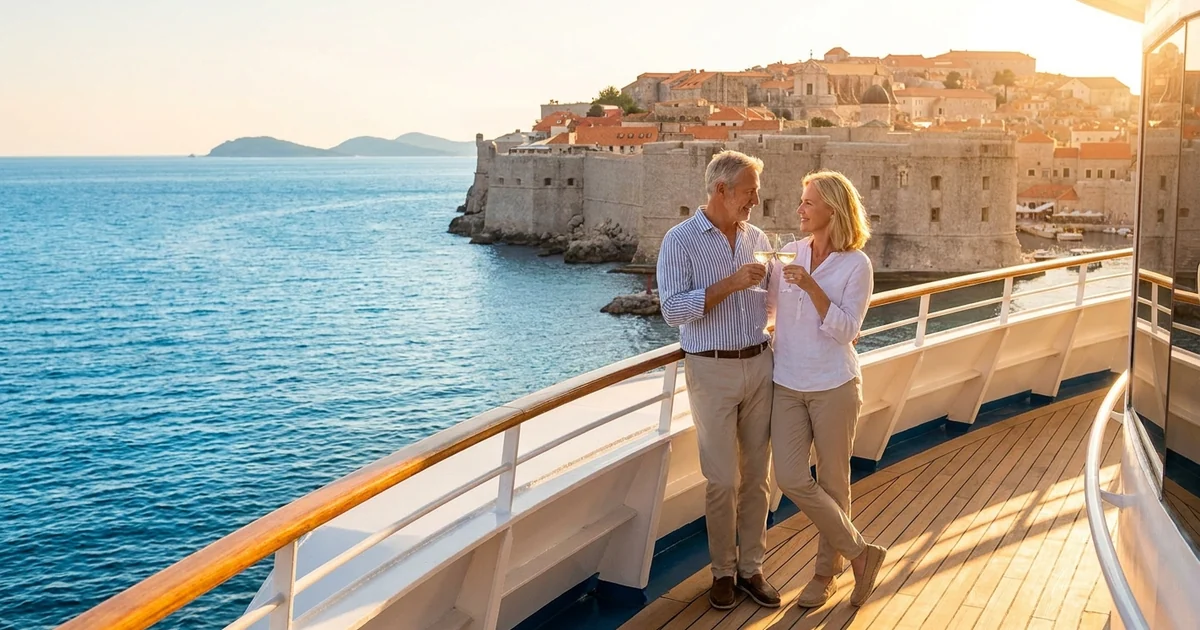
The best Greece and Croatia cruises in 2026-2027 are the itineraries that actually give you real time in both countries, not one token stop and a glossy brochure line. This guide breaks down routes, ship types, timing, and real‑world costs so you can shortlist the best Greece and Croatia cruises for your dates, budget, and travel style.
Quick Answer Best Greece and Croatia Cruises by Traveler Type
| Traveler type | Best cruise style | Why |
|---|---|---|
| First-time Mediterranean cruisers | 10-12 night Athens to Venice, Ravenna, or Trieste itinerary | Gives enough time for both countries without making every day rushed. |
| Couples and honeymooners | Premium small ship with Dubrovnik, Split, Corfu, and Greek Isles | Better port access and calmer evenings than mega-ships. |
| Families | Larger ship with Athens, Dubrovnik, and Greek islands | Kids’ clubs and dining flexibility matter more than boutique ports. |
| Culture-focused travelers | Small ship or luxury line with longer port calls | Croatia and Greece need time ashore, not only photo stops. |
| Budget travelers | 7-night big-ship route with realistic expectations | Lower fare, but expect trade-offs in port depth and crowd levels. |
Can You Really See Greece and Croatia on One Cruise?
Yes. But most “Greece & Croatia” cruises lean heavily toward one country, or pad the schedule with sea days and filler ports that could be anywhere.
Geography in 60 seconds
You are dealing with three main zones:
- Adriatic Sea – Croatia plus Montenegro and northern Italy (Venice/Ravenna, Trieste, Bari).
- Ionian Sea – West coast of Greece (Corfu, Zakynthos, Kefalonia), and the corridor that links Croatia to Greece.
- Aegean Sea – Athens/Piraeus and the classic Greek islands (Mykonos, Santorini, Crete, Rhodes, Paros, Naxos).
Common Greece–Croatia cruise arcs:
- Northern arc: Venice/Ravenna or Trieste → Dalmatian Coast (Zadar, Split, Hvar, Dubrovnik) → Ionian (Corfu) → Greek isles → Athens.
- Southern arc: Roundtrip Athens/Piraeus with a dash up to Dubrovnik/Split plus Corfu or Katakolon.
Rules of thumb for smart itineraries
- To do both countries justice:
- Aim for 10–14 nights and at least 3 ports in each country.
- On 7 nights:
- Expect trade‑offs: typically 2 Greek ports + 2 Croatian ports plus 2–3 sea/other days.
- If a 7‑night cruise offers fewer than 4 total port days, or only one stop in Croatia or Greece, I’d walk away.
How to Choose the Best Greece & Croatia Cruise for You
Step 1 – Decide Your Travel Style (Big Ship vs Small Ship vs Yacht)
Big ships (approx. 2,000–5,000+ guests)
Pros
- Lower per‑night fares.
- Kids’ clubs, slides, multiple dining venues: easy win for families.
- Heavy entertainment and nightlife built into the ship.
Cons
- You often miss smaller Croatian harbors like Hvar, Korčula, Rovinj, or reach them by slow tender. Sometimes they drop these entirely if it complicates scheduling.
- Crowd shock in ports like Santorini and Dubrovnik when three or four megaships arrive together. Expect packed alleys and long lines for cable cars and city walls.
- Shorter port calls so the ship can keep to its timetable.
Who they’re best for
- Families with kids under 12.
- Travelers who care more about slides, shows, and casual food options than about sneaking into tiny villages.
- Budget‑conscious first‑timers who simply want a taste of the region.
Warning:
Big ships concentrate thousands of people into ports that already struggle with overtourism. If you hate queues and shoulder‑to‑shoulder crowds, rethink before you commit.
Small‑ship / premium (roughly 100–1,000 guests)
Think premium lines and boutique Eastern Mediterranean cruises, not floating amusement parks.
Pros
- Better access to smaller ports (Hvar, Korčula, Chania), and fewer tender headaches.
- Itineraries are usually destination‑driven, with longer port days and sometimes overnights.
- Calmer atmosphere, stronger service, and fewer PA announcements selling you something every hour.
Cons
- Higher fares
- Limited flashy hardware: no water parks, minimal gimmicks.
- You still feel rougher seas in shoulder season. Less than a yacht, but do not assume glass‑smooth sailing in April, early May, or late October.
Best for
- Couples, honeymooners, and travelers who prefer long dinners and real conversations over laser tag.
- Mature travelers who want comfort and depth rather than being impressed by a ship’s size.
Yacht / sailing / gulet cruises (8–50 guests)
Very common along the Croatian coast, with a handful of boutique routes stretching to or from the Ionian and Greece.
Pros
- Intimate, “floating boutique hotel” feel. You quickly learn everyone’s name.
- Regular swim stops and access to small coves, tiny harbors, and beaches the big ships never see.
- Ideal if you want to walk straight off the gangway into old towns and nightlife.
Cons
- Small hulls move more in choppy seas. If you get seasick watching a boat on TV, skip yachts in May or October in the Adriatic.
- Most yachts commit to either Croatia or Greece. Genuine both‑country itineraries are rare, usually 10–14 nights, and often $2,500–$5,000+ per person.
- Minimal onboard facilities. Cabins can be tight, and storage is limited. Forget the multi‑restaurant fantasy.
Best for
- Social adults, friend groups, and travelers who prioritize swimming, day‑drinking on deck, and nightlife in port.
- Not suitable for toddlers, people who need elevators, or anyone expecting hotel‑size bathrooms.
Consultant advice:
If your core priority is Dubrovnik + Santorini with as few crowds as possible, I strongly advise a small‑ship or premium line with a capped guest count.
If your kids will revolt without water slides and arcades, accept the compromises of big ships and work around them with careful port choices and timing.
Step 2 – Decide How Many Nights You Can Realistically Travel
7‑night cruises
- Good for: first‑timers, tighter budgets, people short on vacation days.
- Reality check:
- Plan on 4–5 port days total, including both countries and maybe Montenegro or Italy.
- You are usually looking at 2–3 Greek ports + 1–2 Croatian ports, or the reverse.
Think of it as a sampler. Use it to figure out where you want to return on a land trip.
10–12 nights (sweet spot)
- Best balance for seeing both Greece and Croatia without turning it into a forced march.
- Room for:
- 3–4 Greek ports (e.g., Athens, Santorini, Mykonos, Corfu or Crete).
- 3–4 Croatian ports (Dubrovnik, Split, Hvar/Korčula, Zadar/Rovinj).
- You often get 8–10 port days vs 2–3 sea days.
I recommend this length for most travelers flying in from outside Europe. It justifies the flight and gives you proper time ashore.
13+ night “Grand Eastern Mediterranean” cruises
- Best for:
- Retirees, long‑haul travelers from North America or Australia, and “this might be our only time” trips.
- You can stack:
- Multiple Greek isles, Athens, several Croatian ports, plus Montenegro and Italy (Venice, Bari, Trieste) without compressing everything into six hours per stop.
Just remember: more nights means more chances to overspend on excursions and onboard extras if you do not track it.
Step 3 – Pick Your Must‑See Ports (and Avoid Disappointment)
Get brutal with your priorities before you start searching itineraries. Otherwise you end up paying for a “dream cruise” that misses your actual dreams.
Must‑see Greek ports on Greece–Croatia cruises
- Athens (Piraeus) – Acropolis, Plaka, serious museums. Allow at least one pre‑ or post‑cruise night.
- Santorini (Thira) – Clifftop villages and caldera views. Also cable car lines, cruise crowds, and overpriced cocktails if you time it badly.
- Mykonos – Beaches, nightlife, photogenic white lanes. Good if you want nightlife, skippable if you do not.
- Corfu – Venetian‑style old town and beaches; common “bridge” between Adriatic and Aegean.
- Rhodes – Medieval old town and Lindos. Strong for history.
- Katakolon (for Olympia) – The ancient Olympic site. Worth it if you care about classical history.
- Heraklion (Crete) – Knossos Palace and proper Cretan food.
- Smaller options on select small‑ship cruises: Naxos, Paros, Chania.
Must‑see Croatian ports
- Dubrovnik – Walled Old Town. Beautiful, and in high season, overrun. Length of stay matters more here than glossy photos.
- Split – Diocletian’s Palace woven into a living city; busy but authentic.
- Hvar – Polished harbor town, beach clubs, late‑night bars. Magic after dark.
- Korčula – Compact medieval town with strong wine culture and a slower feel.
- Zadar – Sea Organ, historic core, and fewer cruise hordes.
- Rovinj – Photogenic old town often served by smaller ships.
- Nearby add‑on: Kotor (Montenegro) is frequently paired with Croatian ports and offers a dramatic fjord‑like bay.
Honest commentary
- Santorini & Dubrovnik are both worth seeing and heavily over‑touristed.
- Look for full‑day calls or departures after 8–10pm so you can dodge the worst hours.
- If your ship lists 7am–11am in Santorini, I would not build a trip around it. You will spend a lot of that window queuing.
- Hvar & Korčula flip personalities at night.
- Itineraries with late departures (10pm or later) or overnights are absolutely worth the premium if nightlife and atmosphere matter to you.
Best Greece & Croatia Cruises by Traveler Type
For First-Time Mediterranean Cruisers
Look for:
- Straightforward embarkation and disembarkation: routes like Venice/Ravenna to Athens or roundtrip Athens.
- Core icons: Athens + Santorini + Dubrovnik at a minimum.
- At least 5 port days on a 7‑night itinerary.
Good patterns
- 7–9 nights: Ravenna – Split – Dubrovnik – Corfu – Santorini – Athens.
- 9–10 nights: Athens – Mykonos – Santorini – Corfu – Kotor – Dubrovnik – Split – Venice.
Skip anything with lots of vague “scenic cruising” and not enough actual time ashore.
For Couples & Honeymooners
Prioritize:
- Small or premium ships (under 2,000 guests) to avoid spring‑break noise.
- Late departures or overnights in Santorini, Mykonos, Hvar, Dubrovnik. This is where sunsets and after‑dinner strolling happen.
- Balcony cabins, because you will actually use them on this kind of route.
Ideal patterns
- 10–12 nights Athens → Greek isles → Corfu → Dubrovnik → Hvar → Split → Venice.
- Adults‑oriented lines that mention wine tastings, local food partnerships, and smaller harbors, not just pool parties.
For Families with Kids
You need:
- Reliable kids’ clubs, pools, pizza, and ice cream. Happy kids buy you time in port.
- Practical homeports with decent air links: Venice area, Athens, sometimes Bari.
- Itineraries that do not rely on tendering into half the ports; boarding a tender with strollers gets old very fast.
Look for
- 7–9 night big‑ship itineraries with 2 Croatian + 2 Greek ports minimum.
- Port times that do not push you into midnight departures every other night. Young kids will not enjoy it, and neither will you.
Tip:
Aim for June or early September. You still get warm seas without forcing kids through 38°C streets in July or fighting August crowds everywhere.
For Culture & History Lovers
Focus on:
- Ports with serious historical weight and UNESCO sites:
- Athens, Olympia (Katakolon), Rhodes, Heraklion/Knossos, Split (Diocletian’s Palace), Dubrovnik Old Town.
- Itineraries that highlight guided excursions or lectures rather than beach‑only marketing.
Ideal itineraries
- 10–12 nights including Athens, Katakolon, Rhodes or Crete, plus Split and Dubrovnik, and at least one quieter Croatian town like Zadar, Šibenik, or Rovinj for contrast.
You will probably spend more on quality excursions here. Budget for it from the start.
For Nightlife & Social Travelers
You will enjoy:
- Late or overnight calls at Mykonos, Hvar, and sometimes Santorini or Dubrovnik.
- Boutique small‑ships or yachts that dock right in town, not in some industrial pier 30 minutes away.
Recommended styles
- 7‑night yacht or motor‑sailer circuits along the Croatian coast (Hvar, Korčula, Vis), then a separate land or island‑hop in Greece. This avoids trying to cram two nightlife scenes into one rushed route.
- 9–11 night small‑ship routes that clearly advertise late‑night departures from nightlife ports, not just vague “evening in port” language.
Best Time of Year for Greece and Croatia Cruises
Month-by-Month Overview
| Month | Weather | Crowds | Sea Temp | Price Level | Notes |
|---|---|---|---|---|---|
| Apr | Mild, can be cool | Low–Med | Cool (Adriatic cold) | Lower | Good for culture & hiking, limited real swim time |
| May | Warm, pleasant | Med | Swimmable S. Greece, cool Adriatic | Medium | Great shoulder; flowers, fewer ships |
| Jun | Warm–hot | High | Good for both seas | High | Peak routes without worst heat in early June |
| Jul | Hot to very hot | Very high | Very warm | High–Very high | Extremely crowded in Santorini & Dubrovnik |
| Aug | Very hot | Very high | Very warm | High–Very high | Busiest month; families, party crowd |
| Sep | Warm, easing heat | Medium | Warm | Medium–High | Ideal balance; seas still warm |
| Oct | Mild, variable | Low | Cooling | Lower | Better for Greece than Croatia swims; fewer routes |
Key differences
- Adriatic (Croatia) takes longer to warm up. For comfortable swimming, target late June through early September.
- Greek islands hit swimmable temps earlier and can still be pleasant into October, though some beach clubs and seasonal restaurants start closing.
When to Avoid (and When to Pay More)
- July–August
- Pros: convenient school holidays, very warm seas, and maximum choice of itineraries.
- Cons: oppressive heat in Athens and Dubrovnik, crushing crowds, and top‑tier fares. You can easily face 3–4 megaships in port on the same day.
- Best value windows:
- Mid‑May to mid‑June and mid‑September to early October.
- Fewer ships, more tolerable temperatures for ruins and walking tours, and still reliable swimming (particularly in Greece and the southern Adriatic).
What Does a Greece & Croatia Cruise Really Cost?
Price Ranges by Cruise Type (2026-2027)
Approximate cruise‑only fares per person, double occupancy:
- Big‑ship, 7 nights: $1200-$2500
- Small‑ship / premium, 7–10 nights: $3,000–$45,000
- Yacht / boutique, 7 nights: $3,500–$6,000+
Hidden Costs to Plan For
- Port taxes & gratuities: Often $15–$20 per person per day combined if not bundled.
- Shore excursions: Commonly $60–$200+ per person per tour. Expect higher prices for small‑group archaeology tours in Olympia or private “Game of Thrones” experiences in Dubrovnik.
- Drinks & specialty dining:
- Drink packages: $40–$90 per person per day on big ships.
- Specialty restaurants: $30–$80 per person per meal. These add up fast over 10–14 nights.
- Wi‑Fi: $10–$25 per day unless included in the fare. Signal quality can still be mediocre.
- Pre/post stays: 2–3 nights in Athens, Dubrovnik, Venice, Split add a lot to the experience and your bill.
Consultant advice:
Add 20–30% on top of your cruise fare for a realistic all‑in budget, especially if you like proper excursions and premium drinks.
Greece & Croatia Cruise vs. Land/Island-Hopping: Which Is Better?
Cruises
Pros
- Unpack once while the ship takes you between multiple countries and islands.
- No ferry bookings, rental cars, or regular border checks to juggle.
- Efficient way to decide which regions you want to return to and explore in depth.
Cons
- Port calls are short: often 6–9 hours. You will leave some places wishing for one more night.
- Nightlife is limited to ports with late departures or overnights. Otherwise you are back on board for sail‑away.
- Zero flexibility. If you fall in love with one town, you still sail at the scheduled time.
Land-based / Island-hopping
Pros
- Deeper immersion. You live the island or town rather than sampling it.
- You can pivot around weather, strikes, or your own energy level.
- Can be cheaper if you focus on fewer bases and avoid constant hopping.
Cons
- Logistics: ferry timetables, delayed crossings, rental car pickups, luggage. With kids or mobility issues, that drains quickly.
- Moving between Croatia and Greece by land or sea burns days. In most cases it makes more sense to fly between them and do two focused trips rather than one stitched‑together slog.
Consultant recommendation
- Choose a cruise if you want an efficient, low‑logistics way to see both countries in one shot.
- Choose land or island‑hopping if you value slow mornings, repeat visits to the same beach or taverna, and can mentally accept dedicating one trip to Croatia and another to Greece.
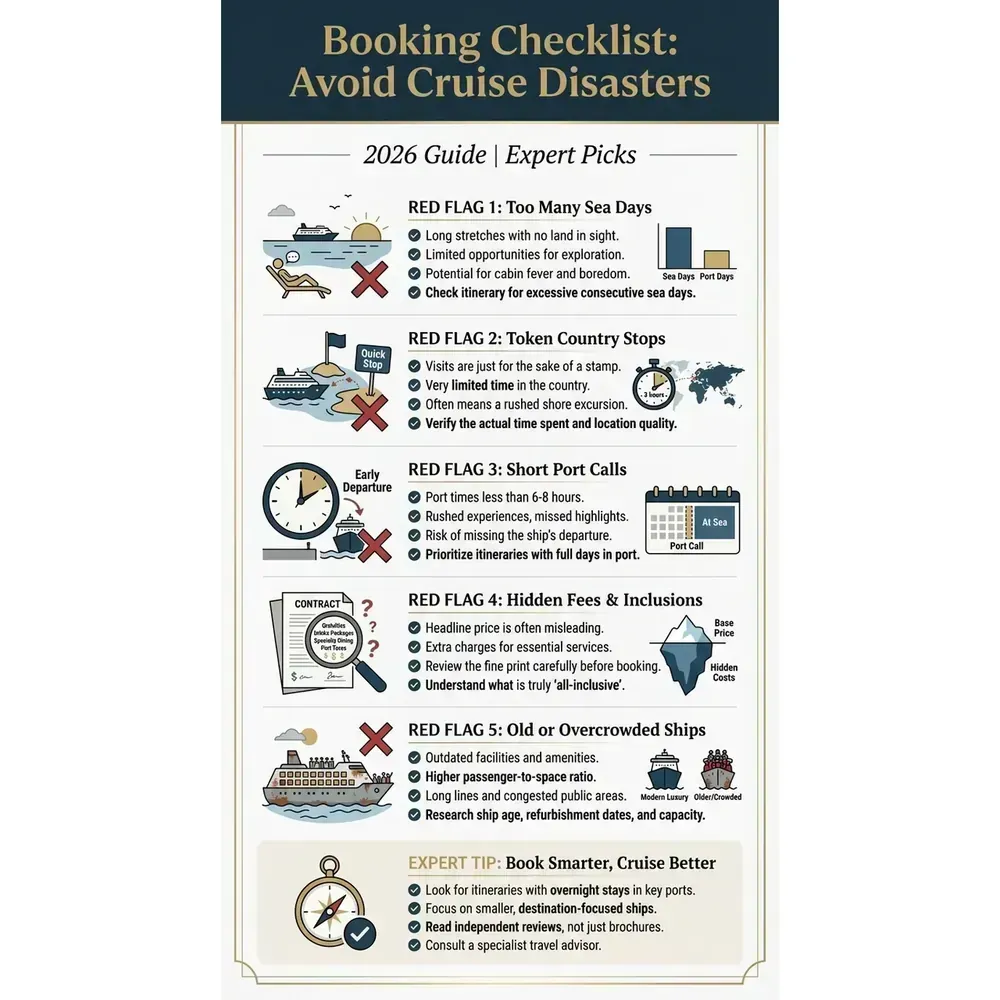
Red Flags & Mistakes to Avoid When Booking
-
Too many sea days on short trips:
- If your 7‑night “Greece & Croatia” cruise has 3 or more sea days, someone padded the schedule to save fuel. Keep shopping.
-
Token country stops:
- One Croatian port plus five Greek ports (or vice versa) is not a real “combo.” Accept it as mostly one‑country or move on.
-
Short marquee port calls:
- Dubrovnik or Santorini calls under 5 hours are poor value. By the time you clear the initial rush, you are already heading back.
-
Ship‑first, itinerary‑second mindset:
- A brand‑new mega‑ship with water slides still delivers a disappointing trip if the route is weak. Start with ports and port times, then choose the nicest ship that fits those basics.
-
Ignoring weather & crowd patterns:
- Booking purely on the lowest fare in late July might save a few hundred dollars and cost you comfort, energy, and patience.
Frequently Asked Questions About Greece and Croatia Cruises
-
Can you cruise both Greece and Croatia in one trip?
Yes. Several Eastern Mediterranean routes link the Adriatic and Aegean, typically between Venice/Ravenna and Athens. To get meaningful time in both, prioritize itineraries of 10–14 nights with at least 3 Greek and 3 Croatian ports instead of ones that toss in a single token stop. -
How many days do you need for a good Greece and Croatia cruise?
For a balanced experience, plan 10–12 nights. That usually gives you 7–10 port days and access to 3–4 ports in each country. Shorter 7‑night sailings work as tasters but usually only reach 2–3 ports per country and feel more compressed. -
What’s the best starting port for Greece & Croatia cruises?
Most combination itineraries start or end in Athens (Piraeus), Venice/Ravenna, or occasionally Trieste. These hubs have solid flight connections and straightforward pre/post stays. For first‑timers, Athens → Venice or Venice → Athens routes are the cleanest to plan. -
Is a small-ship cruise worth the extra cost for Croatia?
Often yes, especially if Croatian ports are a highlight for you. Small‑ships reach Hvar, Korčula, Rovinj, and other smaller harbors more easily and tend to allow longer time in Dubrovnik and Split. If your budget can stretch and you care about quieter ships and better port access, the upgrade pays off. -
Are Greece and Croatia cruises good for kids?
They can be excellent for school‑age children and teens, especially on big ships with robust kids’ clubs and pools. Choose itineraries with straightforward docks, minimal tendering, and some swim‑friendly ports like Corfu or Mykonos. July–August fits school holidays but comes with intense heat and crowds; June is usually the smarter compromise. -
Do you need visas for Greece and Croatia if you’re on a cruise?
Most travelers from North America, the EU, UK, Australia, and similar countries do not need separate visas for short cruise calls in Greece and Croatia, but rules depend on your passport. You must check current Schengen and Croatian entry rules and follow your cruise line’s documentation guidance well before you sail. -
Is it better to go in June or September?
Both work well. June gives long daylight and fully open seasonal services, but crowds build as the month goes on. September offers slightly cooler temperatures, warm seas, and fewer school‑holiday families. For many travelers, mid‑September hits the best balance between price, weather, and crowd levels. -
What should I pack for a Greece and Croatia cruise?
Pack light, breathable clothing, a sunhat, high‑SPF reef‑safe sunscreen, and sturdier walking shoes for polished stone and cobblestones. Add a swimsuit, cover‑up, and a light layer for breezy evenings on deck. Bring modest attire (covered shoulders/knees) for churches and monasteries, plus a daypack and reusable water bottle for long, hot port days.
How to Book the Right Greece & Croatia Cruise (In 5 Simple Steps)
-
Choose your month and total trip length.
Decide between shoulder seasons like May–June or September–October, then lock how many nights you can realistically be away (7, 10–12, 14+). -
Decide ship style (big vs small vs yacht).
Families go big‑ship. Couples and culture travelers lean small‑ship or premium. Nightlife and swim‑heavy trips point you toward yacht or boutique Adriatic cruises. -
List your must-see ports (3–5).
For example: Athens, Santorini, Mykonos, Dubrovnik, Hvar. Cut any itinerary that misses more than one of your non‑negotiables. -
Compare 2–3 shortlisted itineraries.
Use a hard checklist:- Number of port days vs sea days
- Ports in each country
- Time in headline ports (full day vs half day)
- Total price and your price per port day, not just per night.
- Whether the itinerary clearly sells itself as one of the best Greece and Croatia cruises, or just a generic Eastern Med loop with a token stop.
-
Lock in and plan pre-/post stays.
Book the itinerary that best balances ports, budget, and ship style. Then bolt on 1–3 nights pre or post in Athens, Dubrovnik, Venice, or Split to slow down and actually breathe in one place. You will get more from your cruise if you pair it with a short land stay in either Greece or Croatia instead of treating embarkation day as just a transfer.
Book your Greece and Croatia Cruise With Us
Schedule your complimentary consultation below and let’s build your Greece and Croatia Cruise together.