Catholic Destination Weddings in Jamaica 2026 Valid Guide
Catholic destination weddings in Jamaica explained with church requirements, valid ceremony rules, timelines, documents, and resort planning.
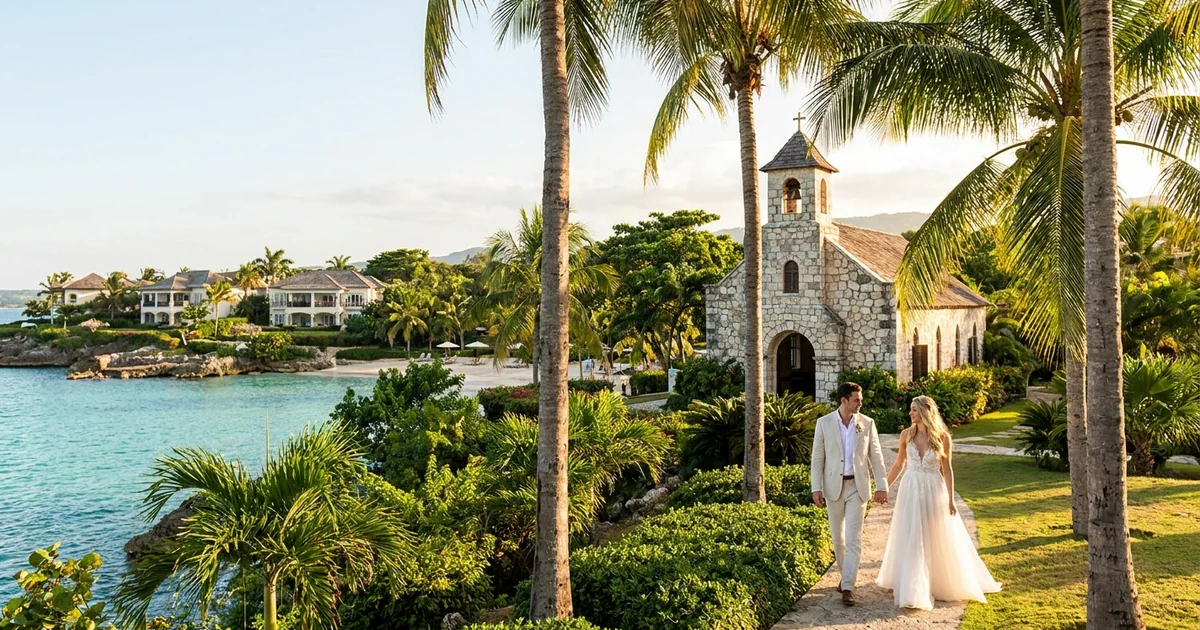
Catholic destination weddings in Jamaica remain absolutely possible in 2026-2027, but a valid Catholic destination wedding in Jamaica does not start with a sales brochure or a gazebo. It normally happens in a Catholic church, under canon law, with your home parish and the Jamaican diocese both in the loop. You can still have sand between your toes, tropical photos, and the resort party you want. You just do the sacrament properly first.
Quick Answer How Catholic Weddings in Jamaica Usually Work
| Decision | Best default | Why |
|---|---|---|
| Ceremony location | Catholic parish church or approved chapel | A resort beach setup usually does not meet Catholic form. |
| Planning lead time | 9-12 months | Your home parish and Jamaican parish both need time for paperwork. |
| Legal structure | Confirm civil and church steps separately | A valid sacrament and local civil paperwork are not always the same process. |
| Resort role | Host the room block and reception | The resort can support the celebration, but the Church controls the sacrament. |
| Biggest risk | Assuming a chapel photo means a Catholic wedding | Confirm priest faculties, parish approval, and diocesan requirements in writing. |
Can You Have a Catholic Destination Wedding in Jamaica?
Yes. You can have a fully valid, sacramental Catholic wedding in Jamaica that your home parish and the wider Church recognize. The catch is understanding how the Church actually works on the ground:
- The sacrament almost always happens in a Catholic parish church or approved chapel, not on the sand or in a generic gazebo.
- Your home parish and the Jamaican parish/diocese both have to sign off on it.
- Many resort “Catholic” or “chapel” weddings are civil or symbolic only, not Catholic marriages in the canonical sense, no matter how holy the photos look.
Myth vs. Fact
-
Myth: Any ceremony at a resort chapel in Jamaica counts as a Catholic wedding. Fact: For validity, the marriage must follow Catholic form: Catholic rite, authorized priest, two witnesses, proper permissions. A cross on the wall is not enough.
-
Myth: If the minister wears a collar or calls it a “religious” wedding, it’s automatically Catholic. Fact: Only a priest or deacon with faculties from the local bishop can assist at a Catholic marriage. No faculties, no sacrament.
-
Myth: Beach weddings are now allowed everywhere by the Church. Fact: Church law still assumes weddings happen in a sacred building. Outdoor exceptions are rare, need written permission from the bishop, and most destination setups do not bother with that step.
How Catholic Marriage Abroad Works (Canon Law in Simple Terms)
What Makes a Catholic Wedding “Valid” and Recognized Back Home?
In plain English, a Catholic wedding is valid when:
- At least one of you is a baptized Catholic.
- Both of you are free to marry. That means no prior marriage without a decree of nullity, no unresolved civil situations, and no pressure.
- You marry according to Catholic form:
- You use the Catholic rite of marriage.
- A properly authorized Catholic priest or deacon presides.
- Two witnesses are present.
- You marry in a Catholic church or chapel unless the bishop specifically permits another place.
The Church assumes you marry in a parish church, not just anywhere that looks pretty. A terrace or gazebo only becomes an option if the bishop explicitly allows it, and that is uncommon.
If you work through this process correctly in Jamaica, your marriage:
- Is valid sacramentally.
- Goes into the Jamaican parish marriage register.
- Gets recognized by your home diocese once your parish receives notification.
Special Considerations When Marrying Outside Your Home Diocese
When you live in one diocese and marry in another country, there is an extra layer of paperwork and coordination. Example: you live in Chicago, marry in Montego Bay.
Here is the real structure:
-
Your home parish prepares your marriage file:
- Marriage prep (Pre‑Cana, meetings with the priest or deacon).
- Verification that both of you are free to marry.
- Any needed dispensation or permission (mixed marriage, etc.).
-
Your parish sends your file and permissions to the Jamaican diocese or parish.
-
The Jamaican parish agrees to host your wedding, blocks the date, and helps align civil and church requirements.
I strongly advise you to start working with your home parish early.
Step-by-Step: How to Plan a Catholic Destination Wedding in Jamaica
Here is a realistic playbook for 2026-2027, based on how this actually runs, not how marketing brochures present it.
Step 1 – Talk to Your Home Parish (9–12 Months Out)
Begin 9–12 months before your ideal date. Six months is the bare minimum if your situation is very straightforward.
Ask your priest:
- “We are planning a Catholic destination wedding in Jamaica. Can you help us prepare and send our marriage file abroad?”
- “What are the marriage preparation requirements here: Pre‑Cana, individual meetings?”
- “What is the latest date you need all our documents ready so you can send them to Jamaica in time?”
Some priests may gently push you to marry in your home parish and do a symbolic blessing abroad.
Step 2 - Decide on the Jamaican Church
Target resorts that can perform true Catholic weddings. If required, you can also target churches in tourist zones where parishes are used to visitors:
- Montego Bay – high density of resorts, several Catholic churches within 15–45 minutes of major properties.
- Ocho Rios – cruise and resort corridor with parish churches nearby.
- Negril – resort strip; often involves a drive into town or to a nearby parish for the actual ceremony.
- Kingston – more urban; a better fit if you have family flying through the capital.
Know what you are looking at:
- Parish churches: Safest option. Normal parish under the bishop, regular sacramental life, proper records.
- Resort chapels: Could be:
- A recognized Catholic chapel attached to a parish, or
- A pretty non-denominational room with zero Catholic status.
Contact the local parish office or diocese and confirm whether a chapel counts as an approved Catholic worship space.
When a resort claims “Catholic weddings,” ask bluntly: “Which parish and which priest do you work with?” If they cannot name both, assume you are looking at a non-Catholic or symbolic option.
For couples still in the initial research phase, pages from your own diocesan marriage office, the Jamaican Catholic dioceses, and trusted Catholic outlets like the USCCB’s marriage resources or Catholic Answers can help you double‑check what you are being told by resorts against actual Church teaching.
Step 3 – Complete Marriage Preparation
Catholic marriage prep is not optional paperwork; dioceses treat it as serious requirement.
You can usually expect:
- A Pre‑Cana course or equivalent program (in person, online, or hybrid).
- A FOCCUS or Prepare/Enrich inventory, plus review sessions.
- Several meetings with your priest or deacon to walk through your history, faith, and expectations.
Your goal: finish this 5–6 months before the wedding date so your parish has time to complete your file and ship it to Jamaica without panic or rush fees.
Step 4 – Gather Required Documents
Checklist: Required Documents for a Catholic Wedding in Jamaica
You will not dodge paperwork. Start early.
-
Recent baptismal certificates (issued within the last 6–12 months, with notations).
-
Confirmation certificates (if you have been confirmed).
-
Pre‑Cana / marriage prep completion certificate.
-
Freedom to marry forms or sworn affidavits, usually signed by parents or close relatives stating there is no prior bond or impediment.
-
Copies of passports for civil requirements.
-
Birth certificates (depending on Jamaican civil regulations at the time of your wedding).
-
If previously married:
- Decree of nullity (annulment), or
- Death certificate of former spouse, plus civil divorce paperwork if Jamaican authorities want it.
-
Any other civil documents the Jamaican parish or diocese lists. Your home parish usually receives that checklist.
Do not procrastinate on the paperwork. Overseas parishes move on their own schedule, and mail can be slow. Request them at the very beginning, not “when you get around to it.”
Step 5 – Coordinate Dates With Parish and Resort
Sequence matters more than couples want to admit.
-
Lock the church date first. Only then should you fix the resort ceremony window and reception time.
-
Confirm with the parish:
- Preferred wedding times and days.
-
Factor in practical realities:
- Drive time from your resort to the church. This can run 15–60 minutes each way.
- Transportation: chartered buses or vans for guests, and air‑conditioned cars if possible.
- Heat and humidity. Midday in Jamaica can be punishing, especially in formal clothes.
Pick a late afternoon church ceremony when possible. Cooler air, better light for photos, and an easy transition into a sunset cocktail hour back at the resort.
Step 6 – Handle Permissions Between Dioceses
Your home parish is the quarterback here.
They will:
- Complete your marriage file after prep.
- Request any needed dispensations (for example, mixed marriage if one of you is non‑Catholic).
- Send the complete file, with a formal letter of permission, to the Jamaican diocese or specific parish that agreed to host you.
Timing details that couples often ignore:
- Budget 4–6 months for documents, approvals, and mailing between dioceses, especially if tribunals or special permissions are involved.
- Ask your home parish clearly: “What is the deadline for us to finish everything so it reaches Jamaica on time?”
Sample Email Template to a Jamaican Parish
Adjust to your tone, but stay clear and concise:
Subject: Request for Catholic Wedding – [Your Names], [Proposed Date]
Dear Father [Name] / Parish Office,
We are a Catholic couple from [City, Country] hoping to celebrate our sacramental marriage at your parish. Our preferred date is [Day, Month, Year], with approximately [number] guests.
Our home parish is [Parish Name, City, Diocese]. Our pastor [Name] is preparing our marriage file and will send all documentation and permissions as required.
Could you please let us know: – Whether you are able to host foreign couples for weddings on or around this date – What documents you require and the deadlines – Your parish’s suggested donation/fees for church use, priest, and musicians – Available times for a wedding on that date
Thank you very much for your help.
In Christ, [Your Names] [Contact details]
Step 7 – Plan the Liturgy: Readings, Music, and Cultural Touches
You do not get a blank canvas, but you do get real choices.
Typically you will choose:
- Scripture readings from the approved Catholic marriage lectionary.
- Prayers and blessings from the Rite of Marriage.
- A Nuptial Mass (if both of you are Catholic) or a wedding outside Mass (often better if one is not Catholic to avoid communion confusion).
Flexible elements:
- Selection of readings within the approved options.
- Music: hymns and sacred songs that can be arranged with a Jamaican feel, using a local choir or musicians.
- Customized prayers of the faithful that reference your families and the fact you are marrying in Jamaica.
Hard lines you cannot cross:
- Scripture must be from the Bible. No substituting poetry or romantic quotes for the readings.
- Music must be appropriate for worship. Save party tracks for the reception, not the sanctuary.
You can still bring in Jamaican character:
- Local flowers and greenery arranged in a reverent style.
- Light, breathable wedding attire that respects modesty.
- A brief Jamaican hymn or Gospel‑style choir piece, as long as the priest approves it liturgically.
Step 8 – Beach vs. Church: How to Balance Both
Canon law expects the sacrament to happen in a church. Ignore that, and you will end up with nice photos but no valid Catholic marriage.
A workable model for Jamaica:
- Celebrate the wedding liturgy and the exchange of consent in the parish church.
- Then move to the resort to:
- Take beach photos in your wedding clothes.
- Host a beachfront cocktail hour and reception.
- Possibly have a short prayer or blessing on the beach led by the priest, if present, or said by you yourselves. Not a “second wedding,” not a repeat of vows.
Step 9 – After the Wedding: Documentation and Recognition Back Home
Once the rings are on and the photos are done, paperwork still matters.
In Jamaica:
- The Jamaican parish or presiding priest records your marriage in the parish register.
- Someone files the civil paperwork with the local civil registry. Sometimes the parish handles it; sometimes you go to the office with their help.
- You obtain several civil marriage certificates. Plan on $30–$80 for multiple copies and any courier fees.
Back home:
- Your home parish receives official notification or a copy of the church marriage record from Jamaica.
- They note your marriage in your baptismal register, which is how the Church keeps your sacramental record straight across borders.
Canonical Requirements vs. Typical Resort Offerings
| Requirement | What It Means | Who Handles It | Notes |
|---|---|---|---|
| Catholic church or approved chapel | Wedding inside a Catholic parish or officially recognized chapel | Jamaican parish/diocese | Resort chapels are not automatically Catholic. Verify with the local parish. |
| Catholic form & authorized clergy | Catholic rite; priest/deacon with faculties from local bishop | Jamaican parish/diocese | A “minister” hired by the resort may not be Catholic or authorized. Ask directly. |
| Pre‑Cana / marriage prep | Course, meetings, FOCCUS or similar | Home parish/diocese | Usually must be finished before your file goes abroad. |
| Freedom to marry documentation | Forms/affidavits confirming no prior valid bond or impediment | Home parish | If annulment is needed, start 12–18 months ahead. No shortcut here. |
| Transfer of marriage file | Sending your full file and permissions to Jamaica | Home parish / chancery | Give this 4–6 months to avoid last‑minute crises. |
| Civil marriage requirements | Jamaican civil law: IDs, certificates, possible waiting periods | Couple + Jamaican parish/resort | Requirements change. Confirm specifics in the year of your wedding. |
| Liturgy planning | Readings, music, Mass vs. ceremony outside Mass | Couple + Jamaican priest | Use approved texts and sacred music; add Jamaican flavor with pastoral guidance. |
Costs of a Catholic Destination Wedding in Jamaica
All amounts are rough 2026-2027 USD ranges, not quotes. Jamaica is cheaper than some islands but still requires budgeting.
Typical Church and Sacramental Fees
Expect a mix of donations and specific service fees:
- Church use donation: $200–$800
- Priest/celebrant stipend: $100–$300
- Organist / musician / cantor: $400–$700
- Altar servers / sacristan: $150-$200
- Marriage license / civil registry fees: $150-$200
Budget $500–$1,200 for church‑related costs, depending on the parish, music expectations, and whether the parish provides musicians or you hire extras.
Resort and Travel Costs
Major categories for a Catholic church ceremony plus a resort celebration:
-
Flights from North America or the UK: $400–$1,000+ per person, depending on season and departure city.
-
Mid‑ to high‑end resort accommodation:
- $250–$700+ per room per night, double occupancy, in high season.
-
Resort wedding package (reception, décor, photography, basic coordination):
- Simple or intimate setups: $2,000–$5,000
- Larger or luxury events: $7,000–$20,000+ based on guest count and upgrades.
-
Group transportation between church and resort:
- $200–$600 for buses or vans, depending on distance and size of your group.
Do not assume a resort “Catholic package” covers the actual parish fees, priest stipend, or diocesan paperwork charges. Even if the resort has a Catholic church, the church fees are additional.
Can You Have a Catholic Wedding on the Beach in Jamaica?
What Church Law Says About Outdoor Weddings
The Church’s baseline rules are not designed around Instagram.
- Marriages are supposed to be celebrated in a parish church.
- A bishop can allow another suitable place, but that is exceptional and heavily controlled.
- Outdoor Catholic weddings, including tropical “altar in the sand” scenes, are not the norm and often not allowed.
In Jamaica, couples who want a real Catholic sacrament typically:
- Marry in a resort church building, then
- Move to the resort or beach for photos and the party.
If you see a package labeled “Catholic beach wedding Jamaica,” ask detailed questions. Who the priest is, which Parish, and whether the bishop has specifically approved outdoor Catholic weddings there.
Creative Ways to Incorporate the Beach Without Breaking the Rules
You do not need to break canon law to enjoy the shoreline.
Options that work:
- Schedule sunset photos on the sand straight after the church ceremony.
- Hold your cocktail hour and reception on a beach deck or lawn.
- Ask your priest (if present and willing) to lead a brief beachside prayer or blessing, clearly framed as thanksgiving, not vows.
- Do a vow rereading during the reception, introduced explicitly as symbolic, since the real vows happened in the church.
Avoid labeling anything after the church ceremony as a “second wedding” or “beach wedding ceremony.” That language confuses guests and muddies the sacramental reality you just spent months arranging.
Choosing the Right Parish and Resort in Jamaica
Questions to Ask Resorts Advertising “Catholic Weddings”
You are trying to separate real Catholic sacraments from “Catholic‑style” weddings.
Ask:
- Is the ceremony in an actual Catholic parish church, or only in your on‑site chapel or gazebo?
- Which Catholic parish and which priest do you work with regularly?
- Do you coordinate directly with the local parish and diocese, or do we have to handle that?
- Are church fees, priest stipend, and musician costs included in your package, or do we pay those separately to the parish?
- Can we bring our own priest, and if so, do you help with the process of obtaining local bishop permission and faculties?
Common Problems and How to Solve Them
When Your Parish Priest Is Unsure or Says No
Not every priest has handled a foreign wedding file.
If he seems hesitant:
- Ask if he can contact the diocesan chancery or marriage office for guidance. That office deals with cross‑border paperwork weekly.
- Stay open to other paths:
- Sacramental wedding at home, followed by a destination celebration.
When the Jamaican Parish Is Slow to Respond
Jamaican parishes do not run on resort timelines.
To keep things moving:
- Email 6–9 months ahead of the planned date.
- If you hear nothing in 2–3 weeks, follow up with a phone call during local office hours.
- Keep your email short and specific:
- Names, home parish, proposed date, estimated guest count.
- Confirmation that your priest is preparing your marriage file.
You can also consider hiring a planner who understands real Catholic church weddings, not just symbolic setups, or work with a resort coordinator who already has a relationship with that parish.
Documentation or Timing Issues
Typical snags and what to do:
-
Hard‑to‑find baptismal certificate:
- Ask your current parish for help tracing your baptism parish or diocese.
- If the parish no longer exists, the diocesan archives may hold the record.
-
Pre‑Cana schedule conflicts:
- Ask about online or condensed programs your diocese approves.
- Lock this in right after engagement; do not wait for the “perfect” weekend.
-
Travel changes or date shifts:
- Notify both the home parish and the Jamaican parish fast.
- They may have to adjust dates on letters and dispensations, and the parish calendar is not infinitely flexible.
Pros and Cons: Catholic Destination Wedding vs. Civil-Only Resort Wedding
Catholic Destination Wedding in a Jamaican Church
-
Pros:
- Fully sacramental, acknowledged by the Church worldwide.
- One integrated celebration of faith, vows, and family.
- A visible tie to the wider Church beyond your home country.
-
Cons:
- Heavier logistics: two dioceses, two legal systems, more emails.
- Longer ideal lead time: 9–12 months is realistic.
- The vows happen in a church, not barefoot on the beach.
Civil-Only or Symbolic Resort Wedding
-
Pros:
- Easier to plan on short notice.
- Maximum freedom to marry on the sand, pier, or gazebo.
- Minimal Church paperwork.
-
Cons:
- Not a Catholic sacramental marriage unless you later do a convalidation.
- Can confuse family and your home parish about your actual status.
- Many couples feel spiritually unfinished until they complete the sacramental piece.
If you already know the sacrament matters deeply to you, do not trade it away for a staged “symbolic ceremony” just because the brochure shows a perfect sunset arch.
Final Checklist for Planning Your Catholic Wedding in Jamaica
Spiritual & Canonical Prep
- Meet with your home parish priest (9–12 months out).
- Confirm both of you are free to marry (no unresolved prior marriages).
- Complete Pre‑Cana / marriage prep and FOCCUS or equivalent.
Documents & Permissions
- Obtain updated baptismal and confirmation certificates.
- Complete freedom to marry forms or affidavits.
- Assemble passports, birth certificates, and other civil documents.
- Ensure your home parish sends your file to the Jamaican diocese/parish 4–6 months ahead.
Parish & Resort Coordination
- Secure a date and time with a Jamaican parish near your resort.
- Confirm donations, fees, and musician options with the parish.
- Book the resort and reception, clearly explaining that the church ceremony comes first.
- Arrange buses or vans between resort and church.
Travel & Guest Logistics
- Choose dates outside peak hurricane season if possible (June–November, with September–October highest risk).
- Brief guests about heat, humidity, and modest dress for the church.
- Consider travel insurance and flexible bookings in case of storms or airline chaos.
Backup Plans
- Indoor or covered backup space for photos and outdoor reception.
- Alternate times or dates with the parish if travel disruptions hit.
- Spiritual Plan B: parish wedding at home plus Jamaica celebration if international paperwork chokes the timeline.
When a Catholic Destination Wedding in Jamaica Might Not Be Right for You
This route is not for everyone.
It may not fit if:
- You must marry within 2–4 months and cannot move the date.
- One or both of you has a complicated marital history (prior marriages needing annulment), which can take 12–18 months or longer.
- Your main priority is a very casual barefoot beach scene and you are not especially concerned about the sacramental dimension.
Frequently Asked Questions: Catholic Destination Weddings in Jamaica
Q: Can a Catholic wedding in Jamaica be recognized in my home country? A: Yes. As long as you marry according to Catholic form in a Catholic church or approved chapel with proper permissions, your marriage is a valid sacrament and recognized worldwide. Your home parish will record it in your baptismal register once they receive notice.
Q: How far in advance should we start planning? A: Aim for 9–12 months. That window gives room for marriage prep, fresh sacramental records, and transfer of your file to Jamaica. In uncomplicated cases, 6 months can work, but you will be operating with less margin for delays.
Q: Do we need to speak Jamaican Patois or have local witnesses? A: No. The liturgy can be in English, and parishes near resort areas are used to foreign couples. You must have two witnesses, but they can be family or friends traveling with you. If you are short on guests, the parish can usually provide witnesses.
Q: Can a non‑Catholic marry a Catholic in Jamaica in a Catholic ceremony? A: Yes. That is a mixed marriage, and the Catholic party needs permission, which your home parish arranges. The non‑Catholic is not forced to convert but should understand the Catholic view of marriage and children’s upbringing.
Q: Can we bring our own priest from home to officiate in Jamaica? A: Sometimes. Your priest needs faculties from the local Jamaican bishop and must follow local civil rules. You cover his travel and lodging. Because of the paperwork, many couples simply work with a local Jamaican priest the parish recommends.
Q: Is there a dress code for a Catholic wedding in Jamaica? A: Yes. This is still a church, not a beach club. Expect modest dress: covered midriff, restrained necklines, and reasonable hemlines. Use light fabrics, short sleeves, and breathable suits, and bring a shawl or wrap if your dress is very open.
Q: Are there better or worse times of year for a Catholic wedding in Jamaica? A: Weather is usually more stable from December to April, with higher prices and more tourists. June to November is hurricane season, with September–October the riskiest. Also avoid major holy days when parishes may not permit weddings.
Q: Can a Catholic wedding be on the beach in Jamaica? A: In almost all real‑world cases, no. The Church expects the sacrament to take place in a church building. You can absolutely use the beach for photos, reception, and a blessing after the parish ceremony.
A well‑managed Catholic destination wedding in Jamaica lets you honor the sacrament while still enjoying warm air, sea views, and unhurried time with your guests. If you respect Church law, ask blunt questions, and give yourself enough lead time, you can walk away with both the marriage the Church recognizes and the island celebration you actually want.