Grand Seine & Bordeaux: The Best Way to See Two Sides of France in One Trip
A Grand Seine and Bordeaux river cruise guide for travelers who want Paris, Normandy, Monet, D-Day history, Bordeaux wine country, villages, food, and chateaux in one seamless France trip.
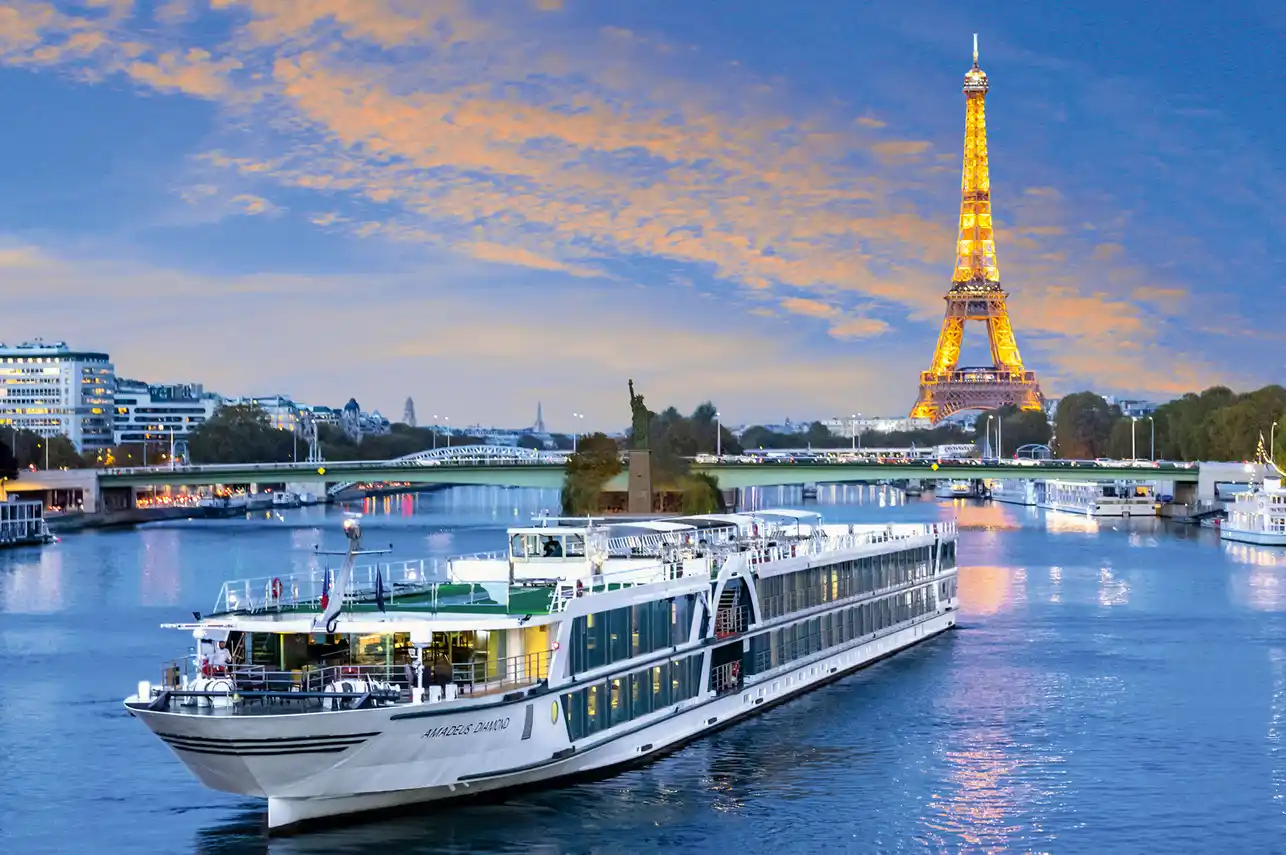
Grand Seine & Bordeaux fits you if you want two very different sides of France in one polished trip: Paris and Normandy first, then Bordeaux wine country, villages, food, and chateaux. It is not the cheapest way to see France. It is the cleaner way to combine two regions that usually require separate planning, separate hotels, and a lot more moving parts.
The Seine gives you Paris, Monet, Impressionism, Normandy towns, and D-Day history. Bordeaux gives you vineyards, old stone villages, chateaux, market towns, regional food, and wine country without turning the entire vacation into a driving trip. The high-speed train transfer between the two regions is what makes the itinerary feel like one journey instead of two cruises stitched together.
For the right traveler, this is one of the strongest France river cruise choices because it answers a very common problem: “I want Paris and Normandy, but I also want wine country.” Grand Seine & Bordeaux solves that in a way that feels organized, comfortable, and worth the longer time away.
Quick Fit Check
| Traveler priority | Grand Seine & Bordeaux fit | Why |
|---|---|---|
| Paris plus Normandy | Excellent | The Seine half gives you Paris, Giverny, Rouen, Normandy villages, and D-Day touring. |
| Bordeaux food and wine | Excellent | The Bordeaux half is built around the Garonne, Dordogne, Gironde Estuary, wine regions, villages, and chateaux. |
| A longer France trip without constant repacking | Excellent | You get two one-week river cruise regions with one planned transfer in the middle. |
| Milestone travel | Excellent | This is better for anniversaries, retirements, birthdays, and longer trips. |
| Seamless logistics | Strong | The train transfer makes the region change feel much easier than arranging the middle yourself. |
| First Europe river cruise | Strong | It works well if France is the priority and you want depth over counting countries. |
| Short vacation | Weak | This is a 14-night cruise before flights, hotel nights, or extensions. |
| New country every few days | Weak | Choose the Rhine, Danube, or a multi-country itinerary instead. |
| Pure wine trip only | Strong | Bordeaux is excellent, but a shorter Taste of Bordeaux or a wine-hosted sailing may be cleaner if wine is the only goal. |
How Does Grand Seine and Bordeaux Cruise Work
Grand Seine & Bordeaux is a 14-night France river cruise itinerary that combines the Seine region with Bordeaux. In practical terms, it gives you the feeling of two 7-night France cruises joined into one trip: Paris and Normandy on the Seine, then Bordeaux and its surrounding wine regions on the Garonne, Dordogne, and Gironde Estuary.
The Seine half is more emotional and historical. It starts with Paris, then moves into the landscapes tied to Monet, Impressionism, medieval Normandy, and World War II history. The Bordeaux half is more sensory and indulgent. It is about wine country, food, villages, chateaux, markets, and the slower rhythm of southwest France.
That contrast is the main point. You are not doing two versions of the same trip. You are getting two sides of France that complement each other.
Why This Works Better Than Piecing France Together Yourself
You can absolutely build Paris, Normandy, and Bordeaux as a land trip. I would only recommend doing that if you are comfortable managing hotels, train timing, private drivers, luggage, restaurant reservations, and regional touring in multiple places.
For many travelers planning a higher-investment France trip, the point is not proving you can handle the logistics. The point is making the trip feel easy enough to enjoy.
Grand Seine & Bordeaux removes several common friction points:
- You do not need to choose between Paris/Normandy and Bordeaux.
- You do not need to build a separate Bordeaux land itinerary from scratch.
- You do not need to drive through wine country after tastings.
- You do not need to repack every two nights.
- You get a planned handoff between the two cruise regions instead of a self-managed travel day.
That last point is important. The bullet-train transfer is the bridge that makes the itinerary make sense. Instead of ending one cruise, figuring out how to get across France, and starting over, you move from the Paris/Normandy chapter to the Bordeaux chapter in a planned way.
The Seine Half: Paris, Monet, Normandy, and D-Day
The Seine half is the reason most travelers notice this itinerary first. Paris is the hook, and it should be. It gives you flights, museums, cafes, neighborhoods, shopping, food, and the emotional start people picture when they say they want to go to France.
But Paris should not be treated as the whole trip. The stronger reason to book the Seine is what happens after Paris.
The route moves into Normandy, where the tone changes. You get smaller towns, river bends, medieval streets, cathedral history, and countryside that feels very different from the city. Stops and excursions can vary by sailing, but the story usually includes places such as Giverny or Vernon, Rouen, Les Andelys, Normandy coast access, and D-Day touring.
Giverny is especially important if you care about art. This is where Monet lived, gardened, and painted. The Japanese garden, water lilies, and changing light make Impressionism easier to understand because you are standing in the landscape that shaped the work. For travelers who also spend time in Paris museums before or after the cruise, that connection becomes even stronger.
Normandy gives the itinerary its emotional center. The D-Day excursion is not just another sightseeing day. For many American travelers, it is the day they remember most. Depending on the cruise line and tour structure, Normandy touring may focus on U.S., British, or Canadian sectors, with places such as Omaha Beach, the American Cemetery at Colleville-sur-Mer, Arromanches, Pegasus Bridge, batteries, museums, or cemeteries.
This is where you should compare details before deposit. Do not just ask whether the itinerary “does Normandy.” Ask what the day actually includes, how long the coach time is, whether the tour matches your family history or military interest, and whether there is enough time for the experience to land.
The Bordeaux Half: Food, Wine, Villages, and Chateaux
Bordeaux changes the mood of the trip. After Paris and Normandy, the second half becomes slower, warmer, and more indulgent. The region is famous for wine, but the best Bordeaux river cruise is not only about drinking wine. It is about how wine, food, villages, architecture, and landscape fit together.
The cruise uses Bordeaux as the anchor, then moves through rivers and estuary landscapes tied to places such as Saint-Emilion, Libourne, Bourg, Blaye, Medoc, Sauternes, Cadillac, and other wine-country areas depending on the sailing.
Saint-Emilion is one of the strongest examples of why Bordeaux works for more than serious wine collectors. Yes, it is a major wine name. But it also has medieval streets, limestone architecture, underground history, and a village setting that feels deeply tied to place. You can enjoy that day even if you are not the person taking tasting notes at every pour.
The same is true across the region. A Bordeaux cruise may include vineyard visits, chateau tastings, market experiences, walking tours, bike options, fortifications, countryside drives, and regional food moments. You may also see local wine festivals, music, dancing, or hands-on regional food traditions. Those details can vary by sailing, but they keep Bordeaux from feeling like seven days of tasting rooms.
That balance is what makes Bordeaux pair so well with the Seine. The first half gives the trip history and emotion. The second half gives it pleasure and texture.
Best Stops and Regions on a Grand Seine & Bordeaux Cruise
| Stop or region | Why it matters |
|---|---|
| Paris | The natural starting point for museums, cafes, neighborhoods, flights, and pre-cruise hotel nights. |
| Giverny or Vernon | Monet, gardens, water lilies, and the Impressionist story behind the region. |
| Rouen | Normandy atmosphere, cathedral history, Joan of Arc connections, and medieval streets. |
| Normandy beaches | D-Day history, cemeteries, museums, beaches, and one of the most meaningful excursion days in France. |
| Bordeaux city | Elegant architecture, food, markets, wine bars, riverfront walks, and a strong base for the second half. |
| Libourne and Saint-Emilion | Wine country, old streets, limestone history, Pomerol access, and village atmosphere. |
| Bourg and Blaye | Smaller-town Bordeaux, fortifications, estuary landscapes, and a less obvious side of the region. |
| Medoc | Classic Bordeaux wine country with chateaux, estates, and structured tastings. |
| Cadillac and Sauternes area | Sweet-wine country, chateaux, countryside, and a different flavor profile from red-wine Bordeaux. |
What the Trip Feels Like Day by Day
The first few days usually feel like classic France: Paris, the Seine, museums, neighborhoods, and river scenery. Then the itinerary gets more intimate as it moves into Normandy. You trade the big-city energy for villages, abbeys, gardens, and the weight of history.
The D-Day day is the most emotional day of the trip. It can be long, and it can include significant coach time, but it is worth it if you care about World War II history. This is not the day to judge by comfort alone. Judge it by whether the tour gives you the context, access, and memories you need.
Then the trip changes. The transfer to Bordeaux creates a natural reset. The second week feels less like a continuation of Normandy and more like a new chapter: wine country, chateaux, river towns, local markets, slower lunches, and more emphasis on food and place.
That rhythm is why 14 nights can work here. The itinerary does not feel like the same idea stretched too long. It feels like two complementary France trips with a clean handoff between them.
Who Should Book Grand Seine & Bordeaux
Book this if you want:
- a France-first trip with real depth
- Paris and Normandy without giving up Bordeaux
- a stronger itinerary than a simple Paris city stay
- Monet, Impressionism, medieval towns, and D-Day history
- wine country, food, chateaux, and villages
- a longer river cruise with less self-managed logistics
- a polished milestone trip for two couples, retirees, anniversaries, or a post-retirement vacation
I especially like this for travelers who have already done Italy or a classic Rhine/Danube cruise and now want France to feel more complete. It is also a strong fit for couples where one person is more drawn to history and the other is more drawn to food and wine. The itinerary gives both people a real reason to be excited.
Who Should Think Twice
Think twice if you want the cheapest France trip, a short river cruise, or a different country every few days. Grand Seine & Bordeaux is designed for depth, not country-counting.
It is also not ideal if you dislike organized touring entirely. You will still have independent moments, but the value of this itinerary comes from the planned excursions, transfers, and regional structure. If you want to wander without a schedule for two weeks, a custom land trip may fit better.
Mobility also deserves careful planning. River cruising is easier than a fast-paced land itinerary in many ways, but Normandy sites, medieval villages, cobblestones, gangways, coach days, and vineyard terrain can still be demanding. Before booking, compare the excursion levels and ask which touring options are gentler.
Price and Value
Grand Seine & Bordeaux should be treated as a premium France vacation You are paying for 14 nights, two regions, included touring, ship-to-ship logistics, onboard dining, and the convenience of not building a complicated France itinerary yourself.
The final quote depends on:
- sailing date
- ship and cabin category
- current promotions
- single supplement rules
- airfare
- pre- or post-cruise hotel nights
- private touring before or after the cruise
- travel protection
- cabin upgrades and optional extras
My Recommendation
I would start with Grand Seine & Bordeaux if you want France to feel like a real journey instead of a city stay with a few day trips.
This is not the right trip for someone trying to spend the least possible amount on France. It is the right trip for someone who wants to come home feeling like they saw two distinct versions of the country without managing every connection themselves.
Related River Cruise Guides
- Seine river cruises are more than Paris if you are comparing the Paris and Normandy half first.
- Is a Bordeaux river cruise worth it? if you want a deeper look at the wine-country half.
- Best European river cruises if you are still comparing France with the Rhine, Danube, Douro, or other routes.
- How to choose a river cruise line before you compare specific ships and dates.
Book Your France River Cruise With Us
Schedule your complimentary consultation below and let’s build your Seine and Bordeaux river cruise together.
FAQ Summary
Is Grand Seine & Bordeaux a good first river cruise?
Yes, if France is your priority and you want a longer, deeper trip. If you only have one week, start with either Paris & Normandy or Taste of Bordeaux instead.
Is this mostly a wine cruise?
No. Bordeaux is wine-focused, but the full itinerary also includes Paris, Monet, Normandy, D-Day history, villages, chateaux, food, and regional culture.
Why not just do Paris, Normandy, and Bordeaux by land?
You can, but the land version requires more hotels, transfers, luggage handling, train planning, private touring, and decision-making. The cruise is stronger if you want France with less friction.
Is the train transfer difficult?
The point of the itinerary is that the rail transfer is handled as part of the trip structure. That makes the move between Paris/Normandy and Bordeaux feel much easier than arranging the middle independently.
Who should skip this itinerary?
Skip it if you want a short trip, the lowest fare, nightlife, or a new country every few days. This itinerary is built for depth, comfort, food, wine, art, and history.