Luxury Travel for Seniors – Complete 2026 Guide
Use this luxury safari packing list for seniors to stay comfortable, stylish, and prepared for game drives, flights, lodges, and changing weather.
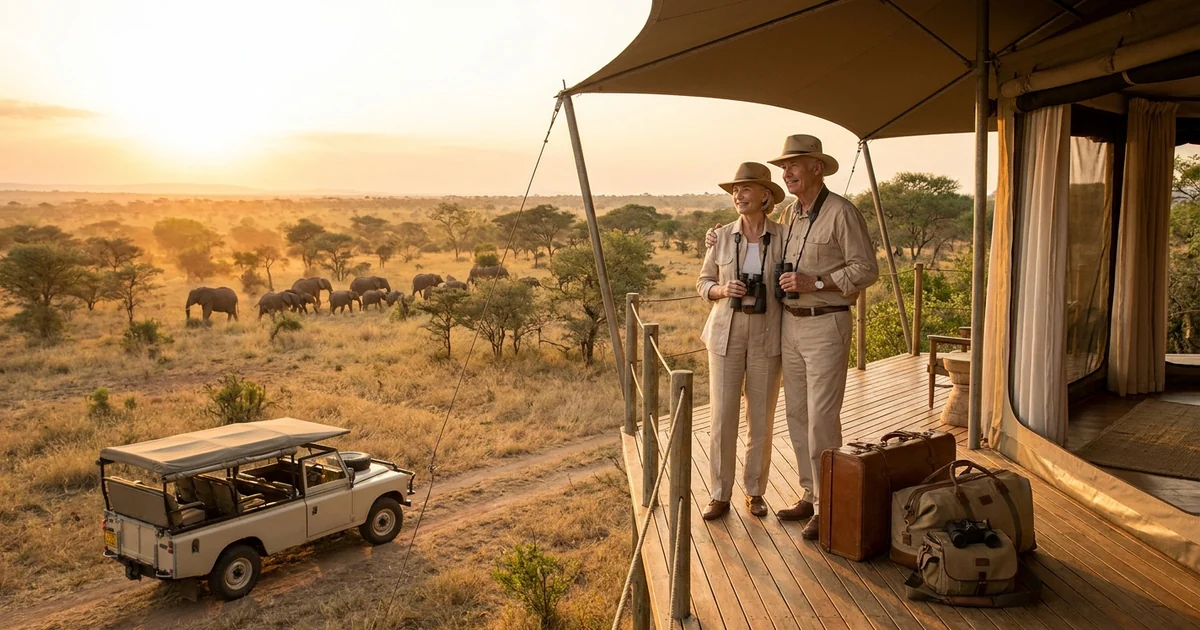
The right suitcase can shape the entire safari experience. When you are heading out on early morning game drives, moving through small bush airports, and settling into elegant lodges far from major stores, a thoughtful luxury safari packing list for seniors is less about packing more and more about packing well.
For senior travelers, comfort and ease deserve the same attention as style. The best safari packing strategy supports mobility, temperature changes, long travel days, and the practical realities of being in remote settings without sacrificing the polished feel that makes a luxury trip so enjoyable.
What makes a luxury safari packing list for seniors different
A safari packing list for a younger adventure traveler often leans minimalist and rugged. For seniors, the priorities are a bit more refined. Clothing needs to be comfortable for sitting in vehicles for extended periods, shoes should feel secure on uneven ground, and medications and travel documents need to be especially well organized.
Luxury also changes the equation. Many upscale safari camps and lodges offer laundry service, carefully planned daily schedules, and attentive staff, which means you do not need to overpack. At the same time, luxury properties may include elegant dinners, lounge areas, and flights with luggage restrictions, so your wardrobe should be versatile rather than bulky.
The goal is simple: bring what helps you feel steady, comfortable, and confident from departure to return.
Start with the luggage itself
Before thinking about shirts and hats, think about how your bags will move. On many African safari itineraries, especially those that include bush flights, soft-sided luggage is strongly preferred and sometimes required. A heavy hard-shell suitcase may be inconvenient or even unusable on parts of the trip.
A lightweight duffel with structure, a compact rolling carry-on for major international flights, and a small personal item usually create the easiest combination. If lifting is a concern, keep every bag manageable enough that it can be opened, shifted, and repacked without strain. Even when porters are available, your own peace of mind matters.
Packing cubes are particularly useful for seniors because they reduce the need to dig through luggage. Keeping daytime wear, evening wear, undergarments, and medical essentials in separate sections makes each lodge transition simpler.
Clothing that works from dawn to dinner
Safari weather can be deceptive. Early mornings are often chilly, afternoons can be warm, and evenings may cool off quickly again. The smartest wardrobe is built around layers in breathable fabrics.
You will likely want two or three pairs of lightweight trousers, a few long-sleeved shirts for sun and bug protection, and a mix of short-sleeved tops for warmer hours. Neutral colors such as khaki, olive, beige, and soft gray generally work best. They are practical in the bush and still look polished at a luxury camp.
A light fleece or knit layer is useful for morning drives, and a packable jacket is worth bringing if your safari includes cooler regions or shoulder-season travel. If you tend to feel cold easily, add a lightweight scarf or wrap. It takes almost no space and can make a surprising difference on open vehicles at sunrise.
For evenings, many luxury safari properties are relaxed rather than formal, but that does not mean careless. One or two smart casual outfits are usually enough. Think easy trousers, a wrinkle-resistant blouse or collared shirt, and a comfortable layer for outdoor dinners. There is rarely a need for dressy shoes or anything complicated.
Shoes should favor stability over variety
This is one of the easiest places to overpack. Most senior travelers do well with three pairs at most: comfortable walking shoes or trail sneakers, easy slip-on shoes for around the lodge, and perhaps one casual pair suitable for dinner.
If your itinerary includes only game drives and lodge stays, you may not need a heavy hiking boot at all. If there are walking safaris or uneven camp pathways, stronger support becomes more important. It depends on the trip design. What matters most is that your primary shoes are already broken in and offer reliable traction.
Compression socks can also be worth packing, especially for long-haul flights and extended vehicle time. They are a small addition that can make travel days significantly more comfortable.
Sun protection is not optional
Even travelers who do not usually think much about sun exposure feel it quickly on safari. Time in open vehicles adds up, and reflected light can be stronger than expected.
A wide-brimmed hat is often better than a baseball cap because it protects the face, ears, and neck. Sunglasses with good coverage, broad-spectrum sunscreen, and lip balm with SPF are all essentials. If you prefer not to reapply sunscreen constantly, lightweight UPF clothing can help reduce the hassle.
This is also where personal comfort comes in. If you have sensitive skin, dry eyes, or heat intolerance, pack the specific products you already trust. Remote camps are not the place to experiment.
Health, medications, and in-transit essentials
For many senior travelers, this is the most important category in the entire luxury safari packing list for seniors. Prescription medications should always travel in carry-on luggage, ideally in original labeled containers. Bring more than you need for the exact trip length in case of delays.
A simple medication organizer can be useful, but it should not replace carrying the original prescriptions. It is also wise to keep a printed medication list, dosing instructions, allergy information, and your physician’s contact details with your travel documents.
A few additional health items often prove helpful: pain reliever, motion sickness remedy, antidiarrheal medication, blister care, hand sanitizer, insect repellent, electrolyte packets, and any sleep support items you routinely use. If your safari includes malaria-risk areas, follow your physician’s guidance well before departure.
For the journey itself, keep a compact in-transit pouch with reading glasses, chargers, tissues, a pen, hearing aid batteries if needed, travel-size moisturizer, and a refillable water bottle. Having these items within easy reach can make airports and transfers feel much less tiring.
Comfort extras that earn their space
The difference between a good safari and a deeply comfortable one often comes down to a few small personal items. A travel pillow for long flights, a light wrap for cool lounges and vehicles, and a pair of binoculars that are easy to hold can all enhance the trip without adding much bulk.
If you use a cane, foldable walking stick, back support cushion, or any mobility aid, bring exactly what works for you at home. Do not assume a luxury property will have an equivalent on hand. High-end service is excellent, but personal fit is personal fit.
A small flashlight or headlamp can also be useful at camps where pathways are softly lit at night. Many luxury lodges escort guests after dark, but an extra bit of visibility can still be reassuring.
Electronics and documents to keep organized
Safari travel often involves multiple flights, lodge transfers, passports, and park entry details. This is where elegant planning matters as much as packing. Keep your passport, travel insurance information, flight details, emergency contacts, and any medical notes together in one organized document wallet.
On the technology side, keep it simple. Your phone, charging cable, portable power bank, camera if you use one, and the correct plug adapter are usually enough. Overpacking electronics tends to create clutter rather than convenience.
If photography is important to you, consider whether you truly want to carry a larger camera setup in vehicles and airports. For some travelers, it adds joy. For others, a high-quality phone camera and a good pair of binoculars create a much easier experience.
What not to pack
A polished safari wardrobe does not need heavy denim, bright colors, expensive jewelry, or multiple dressy outfits. Full-size toiletry bottles, too many shoe options, and “just in case” items also tend to weigh down the trip.
It is equally wise to skip anything that creates unnecessary fuss. If an item wrinkles badly, needs special care, pinches after an hour, or feels heavy in your bag, it probably does not belong on safari. The best luxury travel feels effortless, and your packing choices should support that.
The best packing plan is personal
No two safari itineraries are exactly alike. Kenya in one season, South Africa in another, or a fly-in safari with strict luggage limits will each call for slightly different choices. The ideal packing list depends on climate, camp style, internal flights, activity level, and your own comfort preferences.
That is why the most successful travelers do not rely on a generic checklist alone. They pack for the actual trip in front of them. At Luxury Vacations Consulting LLC, that level of detail is part of what turns a beautiful itinerary into a genuinely easy one.
A well-packed safari should let you focus on the lion in the grass, the quiet of sunrise, and dinner under the stars - not on whether you brought the wrong shoes or forgot the one layer you really needed.