Italy River Cruises 2026/2027: Uniworld Venice vs Land Trips vs Luxury Coastal Cruises
Compare Venice-focused Italy river cruises with coastal cruises and private land trips. Understand the route, land extensions and boarding logistics.
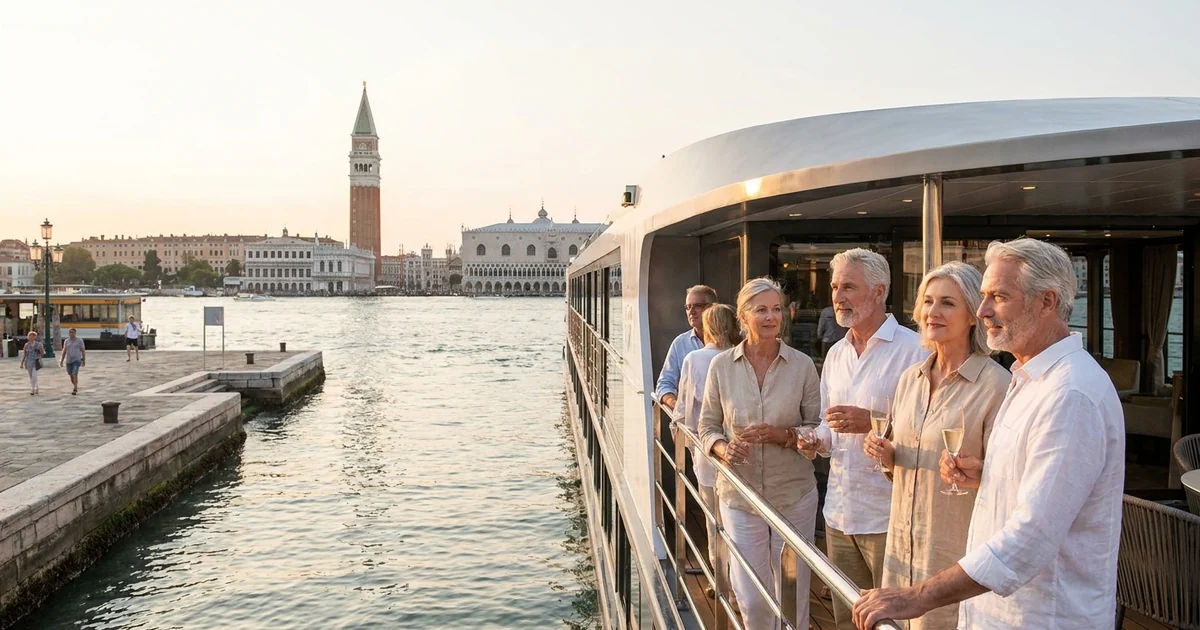
If you are searching for Italy river cruises, the first thing to know is this: you are not choosing a Rhine- or Danube-style route through all of Italy.
For a luxury Italy river and lagoon trip, I would start with Uniworld’s Venice & the Jewels of Veneto on S.S. La Venezia. Think Venice Lagoon, Burano, Torcello, Chioggia, northern Italian food, art and guided cultural touring. The 2026 itinerary is eight days and seven nights, Venice to Venice. It does not sail to Rome or Florence.
That can be wonderful for the right traveler. It is not the right answer for everyone.
If your dream is Rome, Florence, Tuscany, Amalfi, Sicily, Capri, or a broader Italy-by-sea itinerary, you will want a private land trip or a luxury Italy coastal cruise.
Quick Answer: Which Italy Trip Should You Choose?
| If you want | Best fit |
|---|---|
| Venice, lagoon islands, elegant touring, and unpack-once ease | Uniworld Venice river/lagoon cruise |
| Rome, Florence, Tuscany, Lake Como, or Amalfi | Private Italy land trip |
| Amalfi Coast, Sicily, Capri, Croatia, or Adriatic ports | Luxury Italy coastal cruise |
| A first-time “classic Italy” trip | Usually land first, cruise second |
| A refined second-time Italy trip centered on Venice | River cruise is a strong fit |
My advisor shorthand:
If you say, “I want Italy,” I usually start with land or coastal cruise options. If you say, “I want Venice and northern Italy without changing hotels,” we look at river cruises.
What Italy River Cruises Really Mean
Italy does not have a river-cruise network that links Venice, Florence, Rome, Naples, and the Amalfi Coast. You cannot board a river ship in Venice and sail through Italy’s greatest-hits cities.
The luxury river-cruise product is much narrower and more specific:
- Venice as the anchor
- The Venetian Lagoon
- Burano, Torcello, Mazzorbo, and Chioggia-style stops
- Northern Italy culture, food, art, and guided excursions
- A boutique floating hotel experience instead of daily hotel changes
The Main Luxury River Option: Uniworld Venice
Uniworld is the primary luxury river-cruise line I build this article around.
You should consider it if you want:
- A luxury, unpack-once Venice base
- Included touring and a structured daily rhythm
- A smaller ship feel
- Art, food, islands, and northern Italy rather than big-city hopping
- A trip that is easier to manage than stitching together trains, transfers, and hotels yourself
Uniworld Venice vs Private Italy Land Trip
This is the most important comparison.
| Question | Uniworld Venice | Private land trip |
|---|---|---|
| Best for | Venice and northern Italy with ease | Rome, Florence, Tuscany, Amalfi, Lake Como, Sicily |
| Hotel changes | Minimal | Usually 2-5 |
| Flexibility | Moderate; guided structure | High; built around you |
| Dining | Mostly ship-led with curated local moments | You choose restaurants, guides, neighborhoods |
| Pacing | Smooth and contained | Can be relaxed or ambitious |
| First-time Italy fit | Limited | Strong |
| Second-time Italy fit | Strong if Venice-focused | Strong for deeper regional travel |
Choose river cruise in Venice if you want comfort, included touring, and a graceful way to experience Venice and nearby northern Italy without turning the trip into a logistics project.
Choose a private land trip if you want the classic Italy arc: Venice, Florence, Tuscany, Rome, Amalfi, Lake Como, or Sicily. A land trip gives you better hotels, better evening freedom, better restaurant choice, and a truer sense of place if you want several regions.
Uniworld Venice vs Luxury Italy Coastal Cruise
A luxury coastal cruise solves a different problem.
It is not a river cruise, but it may be the better answer if you want Italy by water.
| Question | Uniworld Venice | Luxury Italy coastal cruise |
|---|---|---|
| Best for | Venice, lagoon islands, northern Italy | Amalfi, Sicily, Capri, Adriatic, Croatia/Italy |
| Ship style | Boutique river/lagoon ship | Luxury ocean ship, small ship, or yacht-style vessel |
| Geography | Narrow and Venice-centered | Wider coastal range |
| Port variety | Focused | Much broader |
| Onboard feel | Quiet, cultural, intimate | More amenities, dining venues, and sea views |
| Best traveler | Venice lover, slow traveler, culture-focused couple | Traveler who wants several coastal destinations |
Who Should Skip Italy River Cruise
Skip an Italy river cruise as your main trip if:
- This is your first Italy trip and you want the iconic cities
- Rome, Florence, Tuscany, Amalfi, Sicily, or Lake Como are must-haves
- You want beaches or coastal scenery
- You want lots of independent evenings in different cities
- You dislike group touring
- You want a classic scenic river route like the Rhine, Danube, Douro, or Seine
In those cases, I would build either a private land itinerary or a luxury coastal cruise instead.
Best Trip Pairings
1. Uniworld Venice + Florence and Rome
Best for a client who likes the idea of river cruising but still wants classic Italy.
Structure:
- Seven nights aboard the core Uniworld Venice itinerary; verify any included land nights separately
- 3 nights Florence
- 3 nights Rome
Why it works: the cruise handles Venice beautifully, and the land portion fills in the cities the river cruise cannot deliver.
2. Private Venice, Florence, Rome, and Amalfi
Best for first-time Italy travelers.
Structure:
- 2-3 nights Venice
- 3 nights Florence or Tuscany
- 3 nights Rome
- 3-4 nights Amalfi Coast
Why it works: this is the true Italy highlights trip. It is not as effortless as a cruise, but it gives you the Italy most people actually picture.
3. Luxury Italy Coastal Cruise + Land Add-On
Best for travelers who want Italy by water but not just Venice.
Structure:
- 7-10 night luxury coastal cruise
- Add Rome, Venice, Amalfi, or Lake Como before/after
Why it works: coastal cruises can connect Italy with Sicily, Amalfi, Croatia, Montenegro, Greece, or the Adriatic in a way a river cruise cannot.
For a coastal sailing from Civitavecchia, use our Rome pre-cruise stay and transfer guide to connect your hotel nights with the ship. A Rome land extension on a Venice river itinerary needs a different intercity plan; do not add a Civitavecchia transfer unless your booked ocean cruise actually uses that port.
4. Uniworld Venice + Lake Como
Best for a polished northern Italy trip.
Structure:
- Uniworld Venice
- Private transfer or rail planning onward
- 3-4 nights Lake Como or Milan/Lake Como
Why it works: it keeps the trip refined, northern, and relatively easy without pretending to cover all of Italy.
When to Go
For most Italy river/lagoon and Venice-focused trips, I prefer:
- April to early June for comfortable touring before peak summer heat
- September to October for softer weather and a more polished shoulder-season feel
I am cautious with July and August unless you understand the heat, humidity, and crowds. Venice in peak summer can be draining, especially if you do not love hot walking tours.
Common Mistakes
Mistake 1: Thinking “Italy river cruise” means all of Italy
It does not. It means Venice and northern Italy. If you want Rome and Florence, add land.
Mistake 2: Comparing Uniworld to a cheap land trip
That misses the point. Uniworld is selling ease, inclusions, location, and structure. A private land trip is selling flexibility, range, and deeper customization.
Mistake 3: Ignoring coastal cruises
Some clients say “river cruise” when what they really mean is “Italy by water.” If they want Amalfi, Sicily, Capri, Croatia, or the Adriatic, a luxury coastal cruise may be the cleaner recommendation.
Mistake 4: Booking it as a first-time Italy substitute
For many first-time travelers, the better trip is still Venice, Florence, Rome, and maybe Amalfi or Tuscany by land.
Mistake 5: Forgetting evenings matter
A land trip gives you more restaurant and neighborhood freedom at night. A cruise gives you a smoother day and fewer decisions. Neither is automatically better; it depends on how you like to travel.
Mistake 6: Using the Wrong Venice Transfer Plan
A Venice-based river or lagoon sailing has its own boarding location. Do not borrow an ocean cruise’s Ravenna or Trieste transfer instructions. Our Venice cruise port guide explains the distinction; use your line’s final port documents to book the actual journey.
FAQs About Italy River Cruises
Are there true river cruises in Italy?
Yes, but they are mostly Venice Lagoon and northern Italy experiences. They are not broad river routes through Rome, Florence, Tuscany, and Amalfi.
Which cruise line should I consider for a luxury Italy river cruise?
For a luxury Italy river/lagoon experience, I would start with Uniworld and its Venice-based S.S. La Venezia itineraries.
Is Uniworld’s Venice cruise good for first-time Italy travelers?
It can be, but only if Venice is the main priority. If you want the classic first-time Italy trip, a private land itinerary is usually better.
Should I choose Uniworld Venice or a private land trip?
Choose Uniworld if you want ease, included touring, and Venice as the center of the trip. Choose land if you want Rome, Florence, Tuscany, Amalfi, Lake Como, or deeper control over hotels and restaurants.
Should I choose an Italy river cruise or a luxury coastal cruise?
Choose a river/lagoon cruise if you want Venice and northern Italy. Choose a coastal cruise if you want Amalfi, Sicily, Capri, Croatia, Montenegro, Greece, or a wider Italy-by-sea itinerary.
Can an Italy river cruise be combined with land?
Yes. One of the best approaches is Uniworld Venice plus a private land extension to Florence, Rome, Lake Como, or Tuscany.
Do Italy river cruises go to Rome or Florence?
No. Those cities need to be added by land, usually before or after the cruise.
My Advice
Book Uniworld’s Venice river/lagoon cruise if you want a refined, unpack-once Venice and northern Italy experience.
Do a private land trip if you want the classic Italy highlights.
Choose a luxury coastal cruise if you want Italy by sea with more port variety.
The mistake is not choosing one over the other. The mistake is using the wrong trip style for the Italy you actually want.
Related River and Small Ship Cruise Guides
- River and small ship cruises for the bigger decision between inland rivers and coastal small ships.
- Cruises to Italy if a coastal or Mediterranean itinerary may be a better fit.
- Best Greece and Croatia cruises if you want an Italy-plus-Adriatic trip.
- Small ship cruise benefits if you are comparing boutique ships, yachts, and larger cruise lines.
Plan Your Italy Trip With Us
Let us help you choose the right Italy trip style: Uniworld Venice, a private land itinerary, a luxury coastal cruise, or a combination.
Schedule your complimentary consultation below and let’s build your trip together.